
- The EU AI Act entered into force on August 1, 2024, but its compliance requirements have taken effect in phases beginning in February 2025.
- As of October 2026, obligations involving prohibited AI practices, AI literacy, general-purpose AI models, and transparency are already applicable, subject to relevant exceptions and transitional provisions.
- The 2026 AI Omnibus revised key deadlines, with Annex III high-risk AI requirements scheduled for December 2, 2027, and certain regulated-product AI requirements for August 2, 2028.
- Organizations should assess their AI systems and regulatory roles now, address applicable requirements, and prepare for upcoming high-risk AI deadlines rather than waiting until those dates arrive.

Need a refresher on the EU AI Act's risk categories and requirements? Read Part 2 of our series before exploring the compliance timeline.
The EU AI Act entered into force on August 1, 2024, but its compliance requirements follow a phased implementation schedule. For organizations trying to understand their responsibilities, the challenge isn't just knowing when the law took effect, but which deadlines apply to their AI systems and models.
That distinction matters for organizations worldwide, including those based in the United States. Companies operating in the EU or bringing AI systems to the European market may face different compliance timelines depending on their role, the systems they develop or deploy, and how they use those systems.
As of October 2026, several major requirements are already in effect, but key deadlines remain. The 2026 AI Omnibus — which amended the EU AI Act’s regulations — also changed when high-risk AI requirements take effect, so organizations should confirm they are following the latest information and working toward the right dates.
When did the EU AI Act take effect?
Although the EU AI Act entered into force in August 2024, its first compliance requirements did not begin applying until February 2, 2025. These included AI literacy obligations and prohibitions on certain AI practices. Most remaining provisions became applicable on August 2, 2026.
Other requirements, particularly those governing high-risk AI systems, have later application dates extending through 2028.
EU AI Act implementation timeline
The EU AI Act's requirements take effect across several milestones, beginning in 2025 and extending through 2028.
The following timeline is accurate as of the time of writing and reflects the updated schedule under the 2026 AI Omnibus. While we aim to keep this article updated, organizations should consult the European Commission's implementation timeline for the latest schedule.
February 2, 2025: Initial provisions and prohibited practices
- The Act's general provisions, including definitions and AI literacy obligations, began applying.
- The original prohibitions on certain AI practices took effect.
August 2, 2025: General-purpose AI obligations
- Governance provisions began applying.
- Requirements for providers of general-purpose AI (GPAI) models took effect, subject to transitional arrangements for certain existing models.
August 2, 2026: Most provisions and transparency requirements
- Most remaining provisions became applicable, including Article 50 transparency obligations.
- Enforcement began for applicable requirements involving prohibited AI practices, GPAI models, transparency, and AI literacy.
December 2, 2026: Additional prohibitions and transparency transition
- Additional prohibitions introduced by the AI Omnibus take effect, including restrictions involving AI-generated non-consensual intimate content and child sexual abuse material.
- Certain AI systems placed on the market before August 2, 2026, must meet applicable Article 50(2) content-marking and detection requirements by this date.
August 2, 2027: Existing GPAI models
- Providers of GPAI models placed on the market before August 2, 2025, must meet applicable GPAI requirements by this deadline.
December 2, 2027: Annex III high-risk AI systems
- Requirements for high-risk AI systems covered by Annex III, including certain employment, education, and essential-services applications, become applicable.
August 2, 2028: High-risk AI in regulated products
- High-risk requirements become applicable to qualifying AI systems covered by the EU product-safety legislation listed in Annex I, including certain AI-enabled medical devices and safety-critical equipment.
What EU AI Act requirements apply now?
As of October 2026, several major EU AI Act requirements are already applicable. Based on their role, organizations within the Act's scope should be addressing:
- Prohibited AI practices: The original Article 5 prohibitions have applied since February 2025.
- AI literacy: Providers and deployers must take measures to support the development of AI literacy among relevant personnel, taking into account their knowledge, experience, and the context in which AI systems are used.
- General-purpose AI (GPAI): Providers must meet applicable documentation, transparency, and other obligations, subject to transitional provisions for certain existing models.
- Transparency: Applicable AI systems must meet Article 50 requirements involving AI interactions, AI-generated content, and certain biometric uses.
High-risk AI requirements under Annex III and applicable regulated-product provisions are scheduled to take effect in 2027 and 2028, respectively. Organizations should use this time to identify affected systems and prepare for compliance.
For a detailed breakdown of these obligations, see Part 2 of this series about the EU AI Act’s compliance risk categories and requirements.
What changed under the 2026 AI Omnibus?
The 2026 AI Omnibus changed parts of the EU AI Act to make implementation more manageable, particularly for organizations preparing to meet high-risk AI requirements. The revised deadlines give companies more time to prepare as supporting guidance and standards continue to develop.
Most notably, the deadline for Annex III high-risk AI systems moved to December 2, 2027, while requirements for qualifying AI systems covered by regulated-product legislation were extended to August 2, 2028. The Omnibus also introduced additional prohibited AI practices, transitional provisions for certain transparency obligations, and changes intended to simplify AI literacy requirements.
These revisions mean organizations should revisit compliance plans developed under earlier versions of the timeline. The extensions apply to specific requirements, not to the Act's obligations as a whole.
What are the penalties for EU AI Act noncompliance?
The EU AI Act establishes several penalty tiers based on the nature of the violation. Under Article 99, organizations may face administrative fines of:
- Up to €35 million or 7% of worldwide annual turnover, whichever is higher, for violations involving prohibited AI practices.
- Up to €15 million or 3% of worldwide annual turnover, whichever is higher, for violations of certain other obligations under the Act.
- Up to €7.5 million or 1% of worldwide annual turnover, whichever is higher, for supplying incorrect, incomplete, or misleading information to relevant authorities.
Providers of general-purpose AI models may also face fines of up to €15 million or 3% of worldwide annual turnover under the separate enforcement provisions of Article 101.
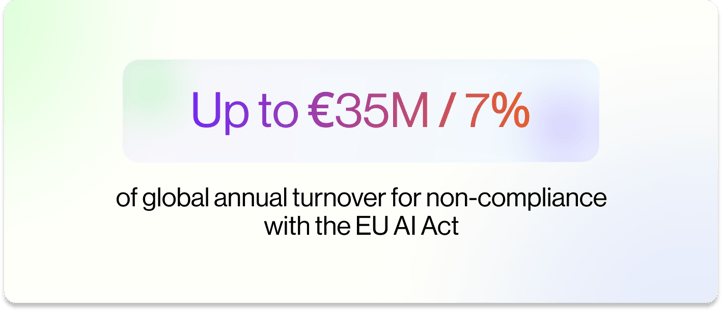
These figures represent maximum penalties, not automatic fines. The amount imposed depends on factors such as the severity of the violation, and smaller organizations may qualify for different penalty limits. Organizations should also remember that penalties apply only to requirements enforceable at the time of the violation.
How should organizations prepare for upcoming EU AI Act deadlines?
Organizations shouldn’t wait for the remaining high-risk AI deadlines to start preparing. The priority now is to address requirements already in effect, identify systems affected by upcoming deadlines, and assign responsibility for the work ahead.
Use the following checklist to identify gaps and set priorities:
 Confirm applicability. Determine whether the EU Act applies to your organization and how, based on your activities involving the European market.Identify organizational roles. Establish whether your organization acts as a provider, deployer, or another regulated operator for each relevant AI system or model.Inventory AI systems and models. Document AI technologies developed, provided, or used across the organization, including third-party systems.Classify systems and map requirements. Evaluate intended uses, risk classifications, and applicable obligations for each system or model.Assess third-party AI dependencies. Review vendor documentation, contractual responsibilities, and available compliance evidence for AI systems and models supplied by external providers.Address current obligations. Verify compliance with requirements already in effect, including applicable prohibitions, AI literacy, GPAI, and transparency provisions.Prepare for high-risk AI requirements. Identify systems likely to qualify as high-risk and begin assessing the documentation, oversight, and controls they will require.Assign deadlines and ownership. Map upcoming compliance milestones to responsible teams, establish internal deadlines, and track progress.Identify and close compliance gaps. Evaluate existing governance, documentation, monitoring, and security controls against applicable requirements.Monitor regulatory and AI changes. Establish a process to track regulatory updates and reassess obligations as AI systems, uses, or organizational roles change.
For more detail on determining applicability and understanding specific obligations, see Part 1, Who Does the EU AI Act Apply To?, and Part 2, Compliance Risk Categories and Requirements.
Preparing for what comes next
The remaining EU AI Act deadlines give organizations time to prepare, but several requirements already apply. Establishing clear ownership, maintaining documentation, and strengthening governance processes now can make the next compliance milestones easier to manage.
Meeting regulatory deadlines is only part of the challenge. Organizations must also translate those requirements into effective governance of the AI systems, models, and identities operating across their environments. Stay tuned for part 4 of this series, where we’ll explore how AI and identity security can help organizations put those obligations into practice.