Secure Your ERP Transformation From Day One
Modernize application access governance for SAP, Oracle, and other critical ERPs with a cloud-native platform that embeds compliance and security by design.


Secure access from planning through completion
Unify access governance across your distributed application landscape
Reduce ERP risk and maintain compliance throughout your digital transformation
Accelerate your migration
Optimized for ERP modernization
Govern access across your entire ERP landscape
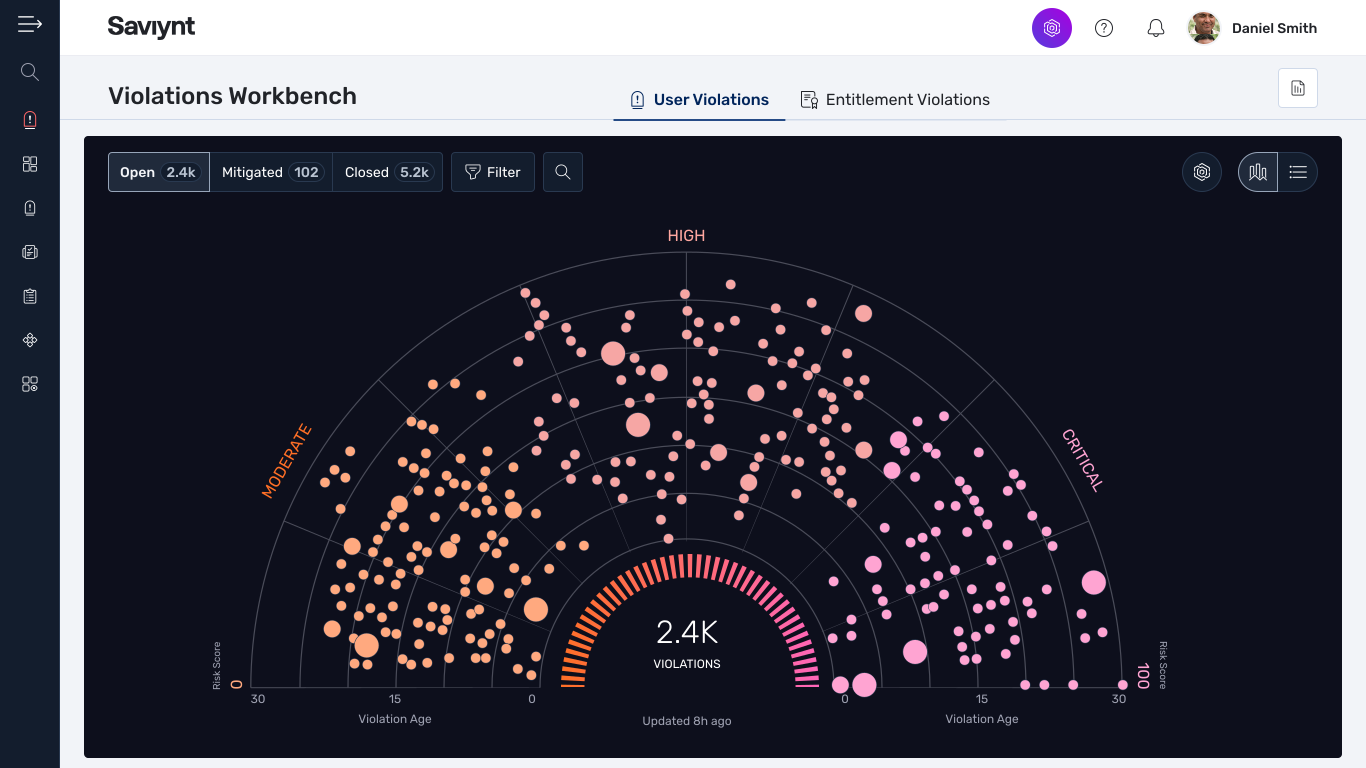
Detect and prevent cross-application SoD violations across SAP, Oracle, Workday, and other critical business systems with unified security policies, continuous controls monitoring, and audit-ready reporting.
Saviynt is a leader in the Access Control Market for SAP & multi-vendor LoB
Learn why Saviynt was selected as an industry leader in securing access governance for organizations around the world.

Maintaining application access governance for our customers

“Before, when we didn't have a modern solution, we felt stagnant. Today, we're in a much better place. Overall, the implementation has been a success, and the Saviynt team was fantastic.”

“Prior to the implementation, we relied on manual processes and localized automation tools for many things — employee onboarding and offboarding, attestations, reporting, and creating audit controls. Now we have automated account and access granting processes, and centralized visibility across the company.”

“Saviynt was picked based on all the product market functionality evaluations, because working quality is the most demanding requirement that we need to support.”

“The automation of our joiner-mover-leaver process and the push-button user access review campaigns — these capabilities have been a game changer for Origin. For one of our larger applications, we’ve given 200 hours back to the organization.”
Real customers, real results
Securing over 60 million identities at global leaders
Learn more about securing app access
Integrations for much more than just your ERP


Frequently Asked Questions
ERP transformations are inherently risky, with up to one-third of application breaches resulting from unauthorized access via default, shared, or stolen credentials. As organizations move sensitive finance, accounting, and payroll data to modern systems, compliance complexity increases dramatically. Many ERP transformation projects underestimate the need to develop appropriate control structures to mitigate SoD violations and access risks.
Without proactive planning and modern tools, organizations face increased compliance expenses, unmanageable sensitive access risks, controls weaknesses discovered post-go-live, and audit failures — issues that could have been avoided by embedding security and governance into the transformation from the start rather than treating it as an afterthought.
ERP transitions require managing access, security, and compliance across both legacy and future-state ERP systems simultaneously — often for extended periods. Saviynt enables parallel governance, allowing you to deploy a single solution that supports access governance for multiple ERPs and critical applications while maintaining audit readiness throughout your transformation.
This approach eliminates the need to maintain separate governance tools for old and new systems, reduces implementation complexity, and ensures continuous compliance during migration. Organizations can standardize their security design across multiple systems, harmonize controls, and adopt a common methodology rather than managing fragmented, ERP-specific GRC tools that create silos and administration challenges.
Legacy ERP vendors' identity governance offerings have significant limitations in today's distributed application landscape. They were designed for single-system governance and struggle with cross-application SoD detection — they cannot identify toxic permission combinations that span multiple systems.
Moreover, these tools have limited integration capabilities with other applications, making it impossible to achieve a holistic view of governance, risk, and compliance activities. Most lack continuous controls monitoring, offering only periodic assessments that leave organizations vulnerable between audit cycles.
Additionally, traditional solutions require specialized expertise, involve expensive licensing and infrastructure, and cannot extend governance beyond their specific ERP — creating unsustainable management overhead as organizations adopt best-of-breed cloud applications alongside their core ERP systems.
Continuous controls monitoring represents a fundamental shift from periodic compliance assessments to real-time governance and risk management. Saviynt's CCM capabilities provide continuous surveillance of IT systems, collecting not just present-state data about controls but supporting real-time updates, automated reporting, and resource optimization.
This approach brings new levels of intelligence to access security, establishing analytical controls that are mapped to compliance regulations like PCI, SOX, GDPR, and ISO standards. Unlike traditional solutions that rely on point-in-time reviews, CCM helps organizations respond immediately to new threats, vulnerabilities, or regulatory requirements — eliminating audit fatigue, dramatically improving control performance, and reducing the manual effort required for compliance management across your ERP ecosystem.
Overprovisioned entitlements are a common and costly problem during ERP transitions, leading to unnecessary license expenses, increased security risks, and compliance headaches. Saviynt's AI-powered analytics identify dormant access, unused permissions, and role bloat that accumulate in legacy systems. During your ERP modernization, you can right-size access based on actual usage patterns rather than blindly migrating inflated permissions to new systems.
Our intelligent role mining and peer analytics help design lean, fit-for-purpose roles that grant users only what they need — enforcing least privilege while optimizing license utilization. Organizations typically discover that 30-40% of provisioned access goes unused, representing both security exposure and wasted licensing costs. By cleaning up access during transformation, you reduce your ERP footprint, lower ongoing license fees, and establish governance practices that prevent access creep in your modernized environment.