Introducing the next generation of AI-powered identity operations — where conversational intelligence meets enterprise-grade governance.
The Challenge: Bridging AI and Enterprise Security
Identity governance is one of the most complex domains in enterprise security. Organizations manage thousands of users, service accounts, entitlements, and compliance policies — all requiring precise execution, strict auditability, and zero tolerance for error.
Creating a single service account in most identity platforms means six screens, a hand-built filter query, and a manual compliance check before anything is submitted. That takes more than eight minutes on average, for a task administrators repeat constantly. Every one of those minutes is a chance to pick the wrong application, skip an owner, or miss a separation-of-duties conflict.
Conversational AI promises to collapse all of that into a sentence. But identity governance is the one place where "close enough" isn't acceptable. Organizations manage thousands of users, service accounts, entitlements, and compliance policies, and every action has to be authorized, validated, and traceable to the person who asked for it.
So the question we asked at Saviynt wasn't whether AI could do the work. It was whether AI could handle the intelligence while the platform guarantees the governance.
Our answer is the AI backbone that drives Saviynt Identity Cloud. This post walks through how it works: the agents that make it up, how a plain-language request becomes a governed action, how we keep the AI itself in check, and how we measure whether it's doing its job.
The AI Behind the Saviynt Identity Cloud
Saviynt’s multi-agent orchestration layer is a team of specialized AI agents built into the Saviynt Identity Cloud. You ask for something in plain language; the agents figure out what you need, check that you're allowed to do it, plan the steps, and carry them out, with every step logged.
This backbone gives administrators, analysts, and end users a single conversational interface for identity governance operations. The platform enforces compliance, authorization, and audit requirements automatically, whatever the request.
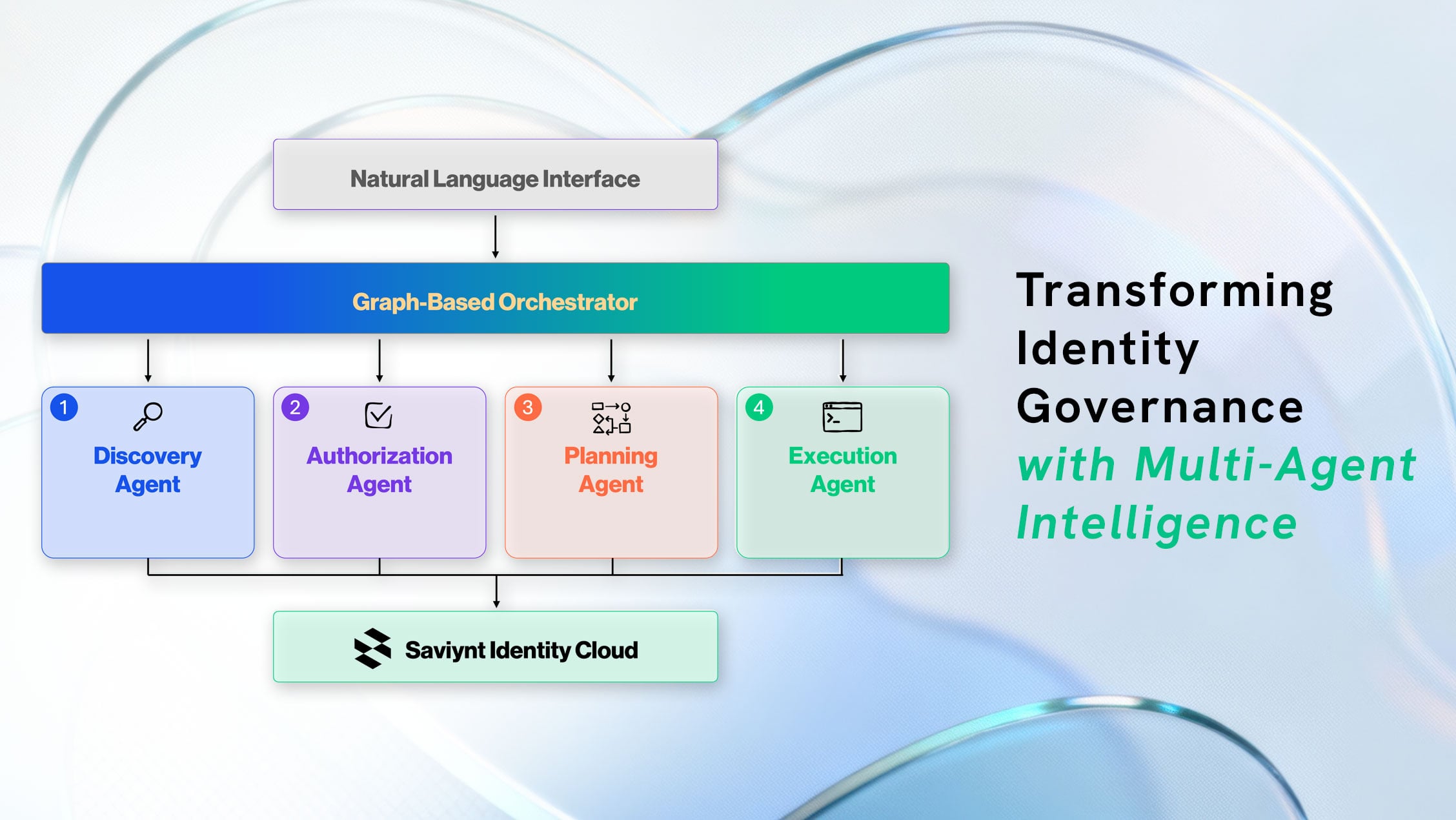
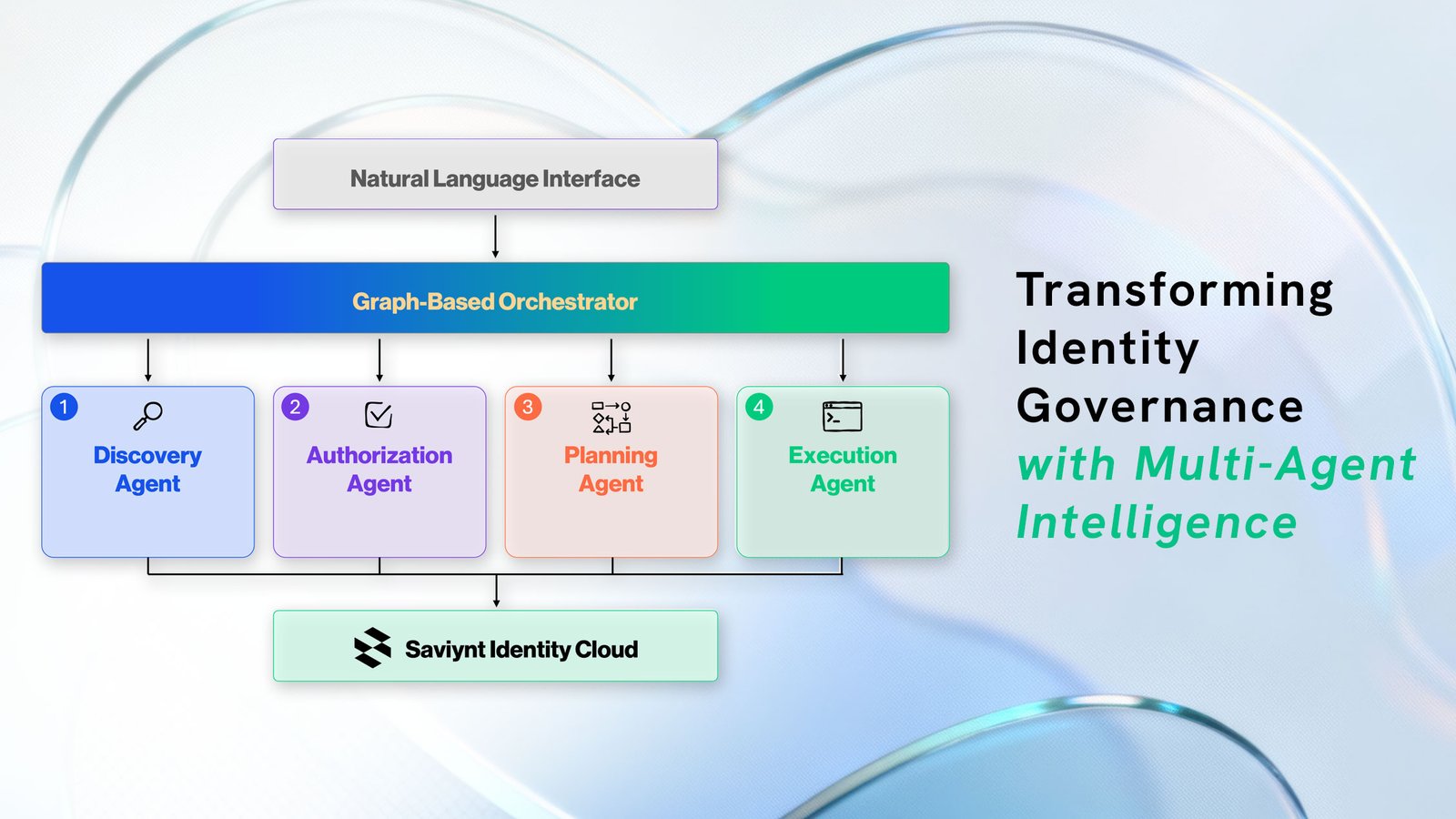
Why multiple agents instead of one? A single large model asked to understand intent, check permissions, plan, and execute is hard to control and hard to audit. Splitting the work gives each step a narrow job, its own checks, and a clear record of what it did. A graph-based orchestration engine coordinates four agents:
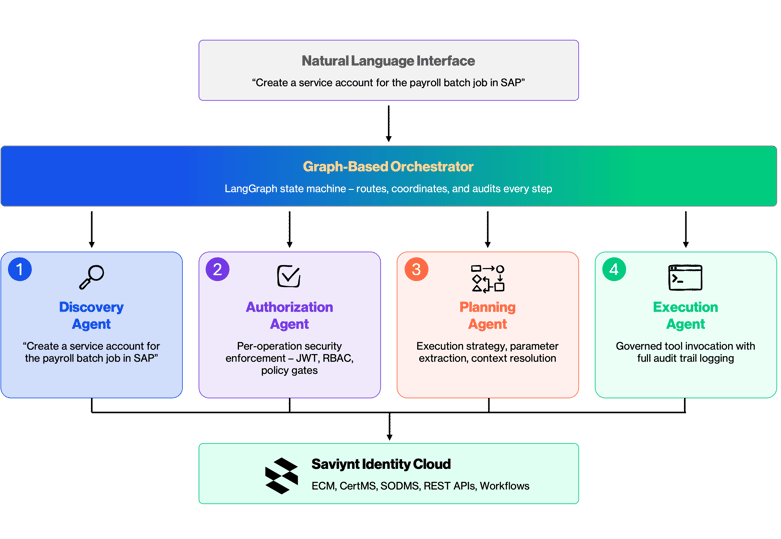
Fig. 1: AIP Multi-agent architecture review
|
Agent |
Its job |
Why it matters |
|
Discovery Agent |
Identifies the right tool or workflow for the request |
Users don't need to know which screen or API to use |
|
Authorization Agent |
Enforces security on each individual operation |
No request gets around your access policies |
|
Planning Agent |
Builds the execution strategy and extracts parameters |
Complex, multi-step requests are broken down correctly |
|
Execution Agent |
Invokes tools under governance, with audit logging |
Every action is recorded and attributable |
How It Works: Five Layers of Intelligence
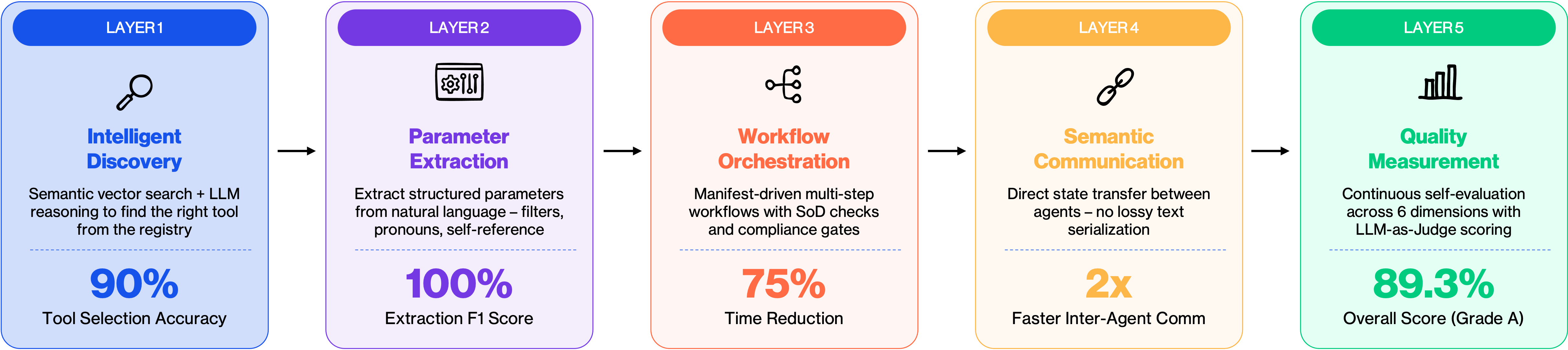
Fig. 2: Five layers of intelligence
A request to the system moves through five capabilities: find the right tool, pull the details out of the request, run multi-step workflows, pass context cleanly between agents, and measure the quality of the result. Here's what each one does and why it matters.
1. Intelligent Discovery — Finding the Right Tool
Saviynt’s multi-agent AI understands what you mean, not just the words you typed, and picks the right capability from everything registered in the platform.
Keyword routing breaks down quickly in identity governance. "Show me who can approve this" and "list the approvers" mean the same thing but share almost no words. The AI combines semantic vector search with LLM reasoning to match intent to the right tool, workflow, or agent.
The platform maintains a continuously-updated semantic index of all registered capabilities. When a query arrives, the system:
- Generates a semantic embedding of the user's intent
- Retrieves the top candidate capabilities using cosine similarity
- Applies LLM reasoning to select the best match, considering context and business domain
The Result: 90% tool selection accuracy — compared to 35% with traditional keyword-based routing.1
2. Natural Language Parameter Extraction
Once the right capability is identified, structured parameters are extracted directly from the conversational query — eliminating the need for users to fill in forms or construct API payloads manually.
The system handles:
- Simple extractions: "Get user details for john.doe" → { username: "john.doe" }
- Complex filters: "Show all SOD violations in open state" → nested filter objects
- Pronoun resolution: "What's the email for him?" → resolves from conversation history
- Self-referential queries: "Show my pending approvals" → resolves to authenticated user
The last case matters for security as well as convenience: "my" resolves to the signed-in user's identity, not to anything the user types.
Result: Every parameter extracted correctly (F1 score of 1.0)² compared to 60% with static form parsing.
3. Workflow Orchestration — Complex Operations Made Conversational
Multi-step processes like creating a service account become a guided conversation, and the compliance checks happen along the way instead of at the end.
For multi-step business processes — like creating a service account, modifying access, or provisioning entitlements — Saviynt uses manifest-driven workflow orchestration.
Back to the eight-minute service account. Instead of six separate form screens, the system guides the administrator through a conversation: application selection, attribute configuration, owner assignment, entitlement provisioning, compliance verification, and request submission. Governance is enforced at every step, not just at submission.
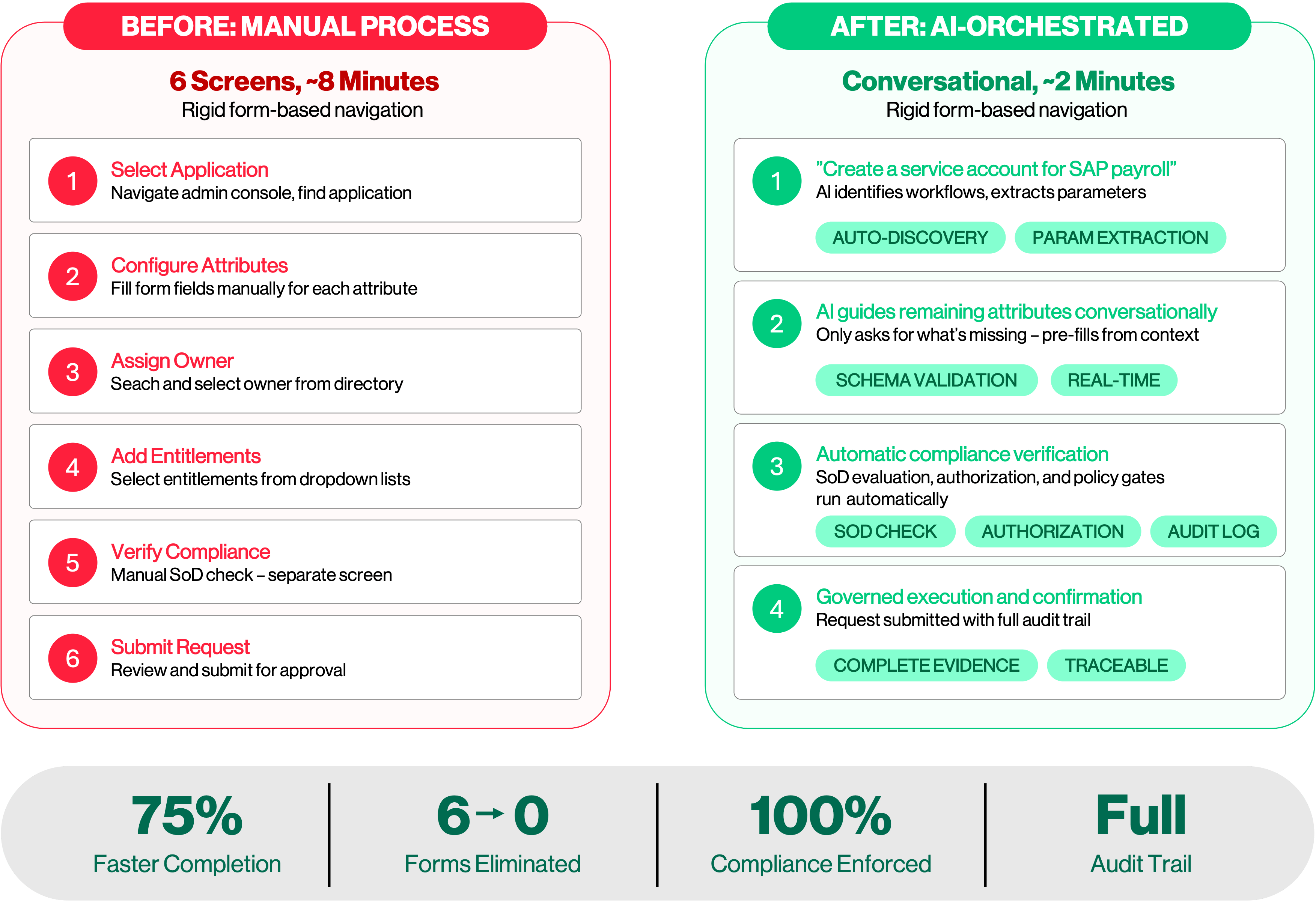
Fig. 3: Service account creation - manual versus AI orchestrated
Key capabilities:
- Configuration-driven — new workflows added through declarative manifests, no code changes
- Compliance built-in — Segregation of Duties (SoD) evaluation performed automatically
- Stateful sessions — users can pause and resume without losing progress
- Real-time validation — inputs validated against schemas at every step
The Result: A 75% reduction in time-to-complete for service account operations, from roughly 8 minutes to 2.³
4. Multi-Agent Communication with Semantic Preservation
When one agent hands work to another, the full meaning of the request is passed along, not a rewritten summary of it. Less gets lost in translation, so the next agent acts on what the user actually asked. In most multi-agent systems, agents talk to each other in text. Each handoff turns the working context into a text description and the next agent reinterprets it, and nuance is lost along the way, like a game of telephone. Saviynt skips that step. Instead of writing out text for the next agent to parse, it passes the agent's working memory (its KV cache, the internal representation a language model builds while processing a request) directly to the next agent.
Result: Up to 2x faster inter-agent communication and 8.5–10.5% higher accuracy in context preservation compared with text-based messaging.⁴
5. Continuous Quality Measurement and Keeping AI in Check
The system continuously measures its own performance using an industry-standard evaluation framework. More on how in "Measuring what matters" below. And our system is held to the same standards we apply to any agent.
In our post on keeping AI agents on task, we established that AI agents are non-human identities that can act outside their intended purpose, and need to be governed like any other identity. Our AI backbone is no exception. A conversational interface that can provision entitlements and create service accounts is exactly the kind of agent security teams should be asking hard questions about.
Those questions are answered in four ways:
- Every request is tied to a real identity. Each request is authenticated with a JWT validated against the enterprise identity, so the system always acts on behalf of a known user.
- Every operation is authorized individually. Each tool call and each workflow step is checked separately. Approval for step one doesn't carry over to step five.
- Compliance checks run inside the workflow. SoD evaluation happens before a request is submitted, not in a later audit.
- Every action leaves a trail. The Execution Agent logs each tool invocation, so auditors can trace any change back to the request and the person behind it.
Measuring what matters
You can't trust an AI system you can't measure and AI that's right most of the time isn't good enough for identity governance. Teams need to know how often it's right, where it falls short, and whether it's getting better or worse. The system scores itself continuously on six dimensions, and a second, independent AI model reviews its responses for quality. And performance is tracked continuously against an industry-standard evaluation framework:
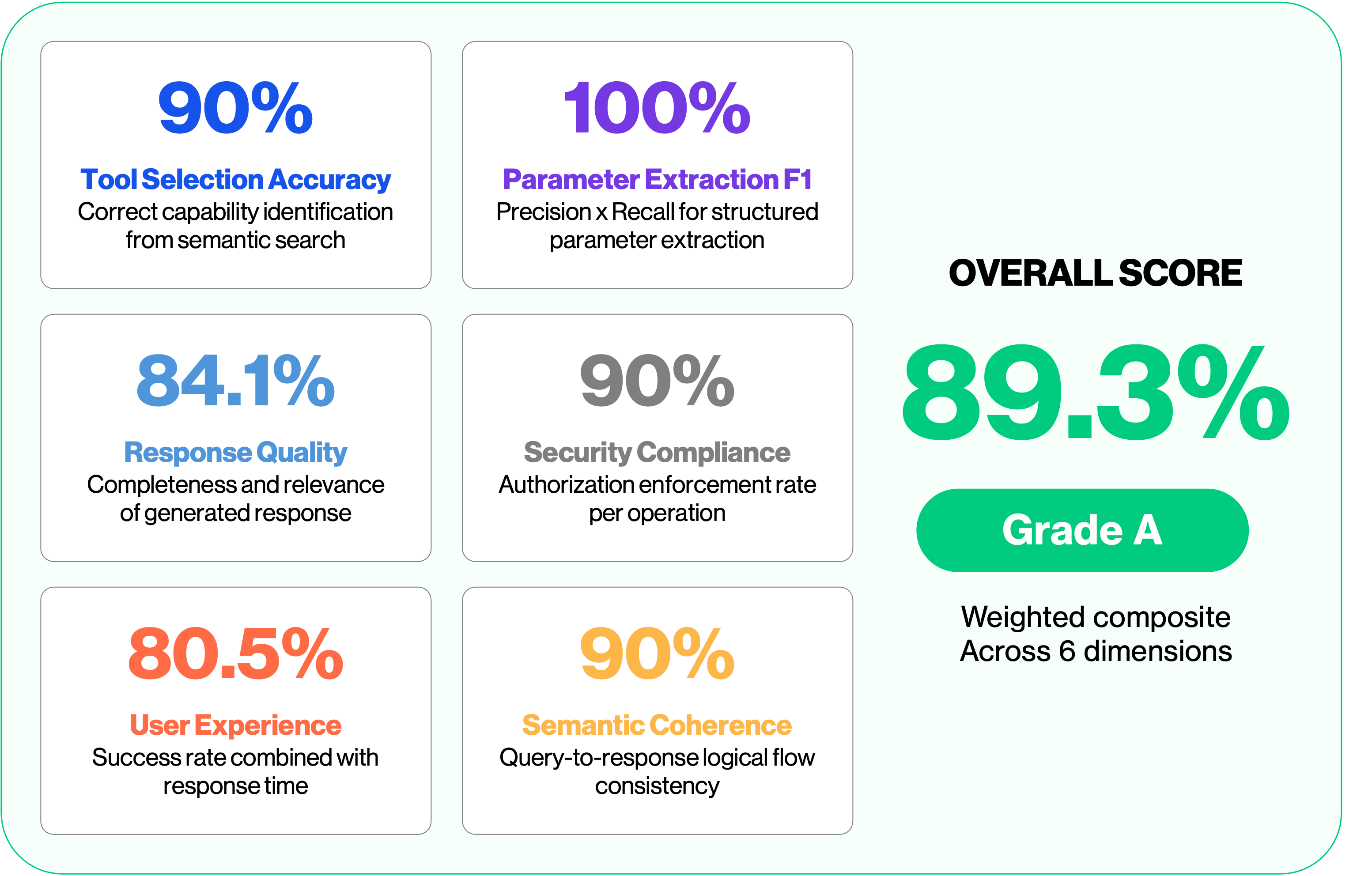
Fig. 4: AIP evaluation dashboard
|
Metric |
Description |
Score |
|
Tool Selection Accuracy |
Correct capability identification |
90% |
|
Parameter Extraction F1 |
Precision x Recall for parameters |
100% |
|
Response Quality |
Completeness and relevance |
84.1% |
|
Security Compliance |
Authorization enforcement rate |
90% |
|
User Experience |
Success rate + response time |
80.5% |
|
Semantic Coherence |
Query-to-response logical flow |
90% |
|
Overall Score |
Weighted composite |
89.3% |
The platform also employs LLM-as-Judge evaluation: an independent AI model that evaluates every response across six quality dimensions (relevance, accuracy, completeness, clarity, helpfulness, and efficiency). Having a separate model do the grading means the system isn’t marking its own homework. Continuous measurement is how we show its work at the system level, so teams can see not just what it did, but how reliably it does it.
Real-World Impact: Before and After AI
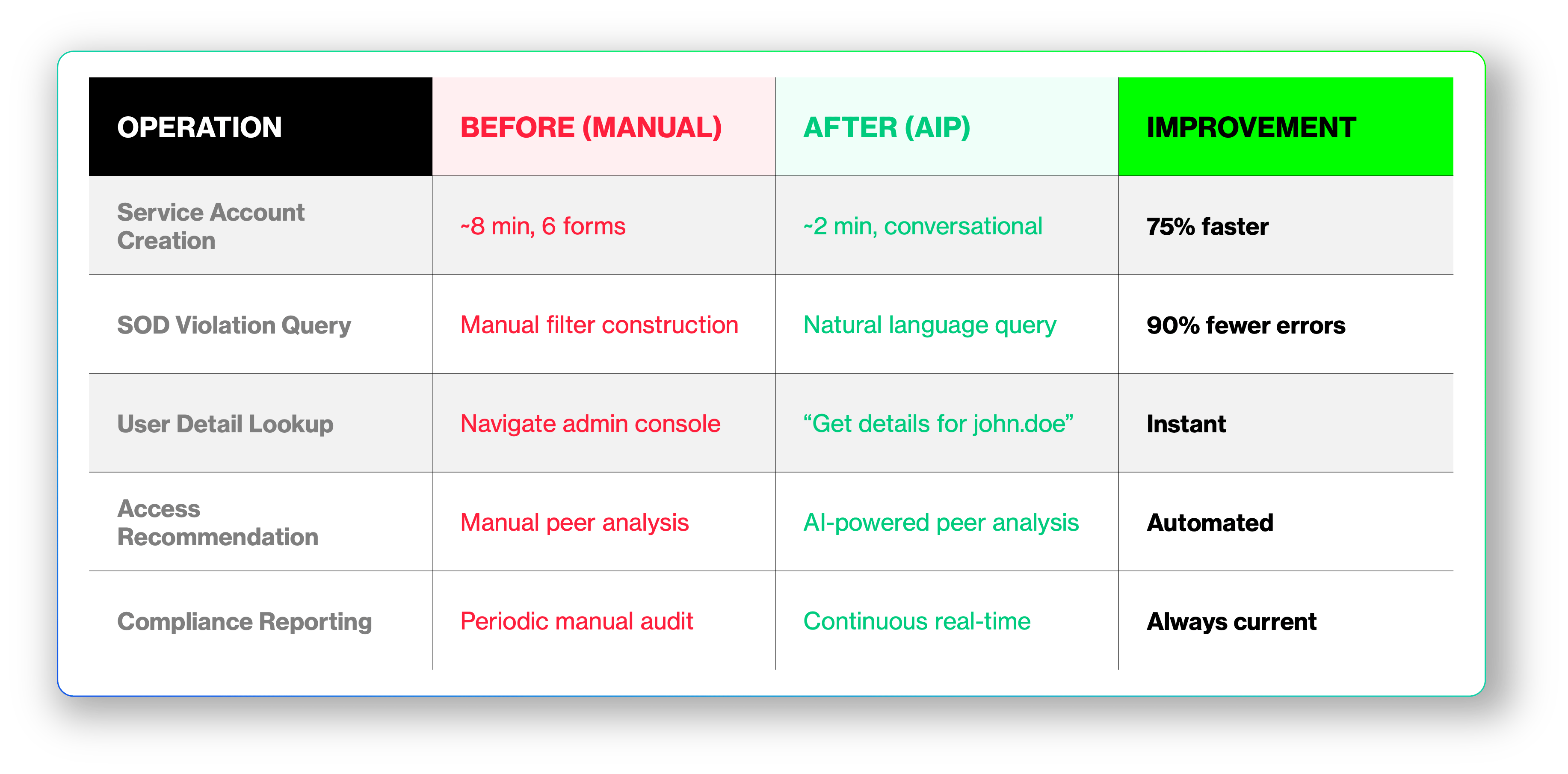
Fig 5: Real-world impact - before and after AI
What changes for identity teams
Routine identity operations move from navigating screens and building queries to asking a question, and the governance stays the same or gets stronger.
Here's how common operations compare before and after:
|
Operation |
Before (Manual) |
After (w/ AI) |
Improvement |
|
Service Account Creation |
~8 min, 6 forms |
~2 min, conversational |
75% faster |
|
SOD Violation Query |
Manual filter construction |
Natural language |
90% fewer errors |
|
User Detail Lookup |
Navigate admin console |
"Get details for john.doe" |
Instant |
|
Access Recommendation |
Manual peer analysis |
AI-powered analysis |
Automated |
|
Compliance Reporting |
Periodic manual audit |
Continuous real-time |
Always current |
The orchestration layer is designed to run in an isolated deployment, keep sensitive data protected, and grow as new tools and workflows are added, without downtime.
Conversational AI is only useful in identity governance if it meets the same bar as the rest of the platform for scale, security, and change management. Here's how Saviynt’s orchestration layer does that.
Built for Enterprise Scale
- Tenant-Isolated Deployment: Dedicated microservice resources per tenant, ensuring data separation and independent scaling.
- Multi-Cloud LLM Support: AWS Bedrock today, extensible to Azure, Google Cloud, and custom endpoints.
- Local Embedding Model: On-device semantic search — no customer data leaves the environment for tool discovery.
- Stateful Sessions: Redis-backed session management supporting concurrent users.
Security-First Design
- JWT Authentication: Every request validated against enterprise identity
- Per-Operation Authorization: Each tool and workflow step individually authorized
- Encrypted Credentials: All sensitive data encrypted at rest and in transit
Extensible by Design
- Manifest Registration: New tools, workflows, and agents registered through a single API endpoint
- Zero Downtime Updates: Capabilities added dynamically without service restart
- Cross-Domain Support: Integrates with ECM, CertMS, SODMS, and any REST API system
The bottom line
The administrator who started this post doesn't need six screens and eight minutes to create a service account anymore. They need about two minutes and a conversation; and the SoD check, the authorization, and the audit record all still happen.
That's the point: the speed and ease of conversational AI, without giving up the security, compliance, and auditability identity governance depends on.
- Users work naturally: requests in plain language instead of forms and query builders
- Security teams keep control: every action is authorized, validated, and traced
- IT operations move faster: multi-step workflows finish in minutes
- Auditors get the evidence: a complete execution trail for every interaction
Identity governance should be intelligent, secure, and effortless. With Saviynt, it is.
Notes
¹ Based on Saviynt internal evaluation using the Agent Evaluation Framework, September 2026. The keyword-routing comparison reflects tool matching by keyword and rule lookup before implementing semantic AI-based discovery .
² Based on Saviynt internal evaluation using a synthetic ground-truth test set of 12 queries, September 2026.
³ Based on Saviynt internal testing comparing the manual admin console workflow with Saviynt AI conversational workflow, September 2026.
⁴ Based on Saviynt internal architecture validation comparing direct KV-cache transfer with text-based messaging between agents. These are design-based performance characteristics, not large-scale production benchmarks.