
 Back to Blog
Enterprises rolled out AI faster than any major technology in history. This speed created a dangerous gap between employees adopting autonomous agents and copilots and security teams who lacked the frameworks to govern them.
In 2026, the reality of the risks hits home. The following identity security trends and predictions outline why identity security is no longer just a support function. It's now the essential foundation for AI growth. We are moving toward a world where non-human identities (NHIs) and autonomous workflows redefine the security stack.
The traditional boundaries of the network have dissolved. We are now managing a “triple threat” of complexity:
-
Agentic Risk: AI agents now act with administrative privileges that often exceed those of their human creators.
-
The Governance Deficit: Organizations are struggling to govern machine-speed identities using human-speed manual processes.
-
The Visibility Gap: Most leaders cannot identify how many autonomous agents are currently active or what data they are accessing.
Navigating this triple threat requires a fundamental re-engineering of how we verify and monitor access.
Identity security is evolving from a perimeter tool into the primary operating system for modern security and resilience.
Trend 1: AI Identities Will Be Targeted
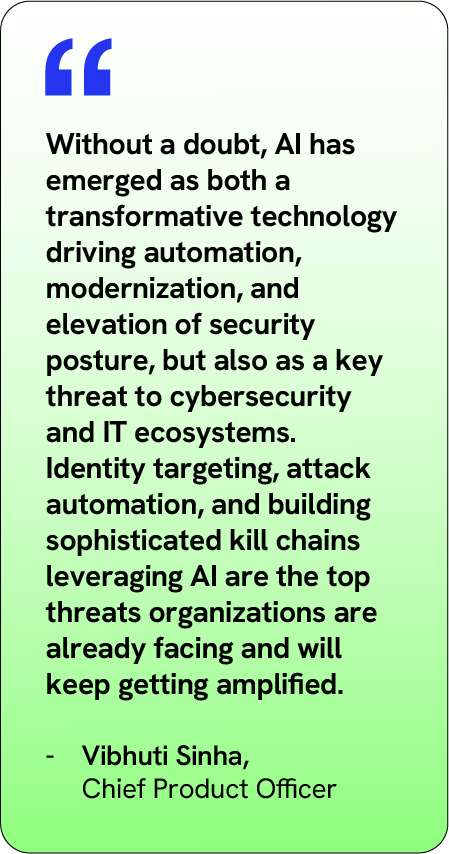 We used to build security around the human person, but a new resident has moved into the network: the AI agent. These non-human identities often operate with elevated administrative privileges - sometimes exceeding the authority of the individuals who created them. Yet, they frequently lack the oversight and lifecycle controls applied to human accounts.
The challenge is that human identity governance itself remains a work in progress. Many teams are still managing manual access reviews, incomplete lifecycle processes, and entitlement sprawl. Now they are being asked to extend governance to identities that move faster, act autonomously, and do not fit frameworks built for people.
AI Identity Trend Insights
-
Most organizations can’t say how many agents are running or what decisions they are making.
-
Attackers use prompt injection and model manipulation to turn agents into insider threats.
-
Dormant machine credentials and unsecured agents give attackers easy access points.
-
Teams are being asked to extend governance to autonomous identities that move at machine speed, even as human identity governance remains a work in progress, plagued by manual reviews and entitlement sprawl.
-
AI identities require the same governance rigor that organizations have spent decades building for human users.
AI Identity Priority Actions
-
Treat identity as infrastructure by integrating NHIs into the core security stack.
-
Centralize lifecycle management to provide a single view of both human and non-human identities.
-
Implement dynamic privilege enforcement and continuous monitoring as baseline requirements for autonomous workflows.
Trend 2: MCP Will Accelerate and Secure AI Innovation
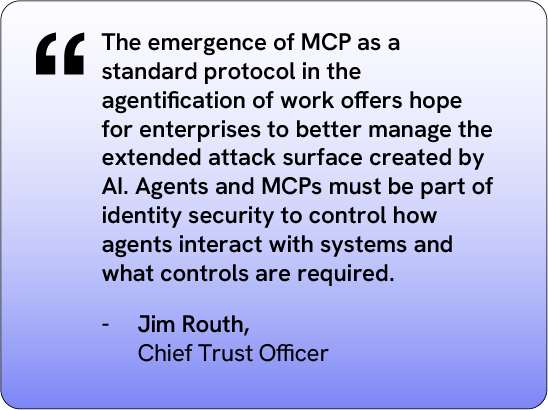 MCP creates a standard way for AI agents to connect directly to applications, tools, and data sources across the enterprise. It plays a role for autonomous systems similar to what APIs once played for cloud platforms. Instead of routing work through a human, MCP allows machines to work with machines.
An MCP connection carries real authority. It allows an agent to retrieve data, trigger workflows, and act inside critical systems without a person in the middle. When those connections are poorly governed, they become high-value access paths. If compromised, they offer attackers a way to influence trusted systems at machine speed and largely out of sight.
In 2026, machine-to-machine dialogues will become the new frontier of risk.
MCP & AI Trend Insights
-
By removing the person in the middle, we remove the pause where judgment once lived.
-
MCP tokens, credentials, and access rules are becoming primary targets because they enable agents to operate within critical systems at machine speed.
-
Most organizations lack visibility into this layer, unable to see which agents are speaking or what permissions they carry.
MCP & AI Priority Actions
-
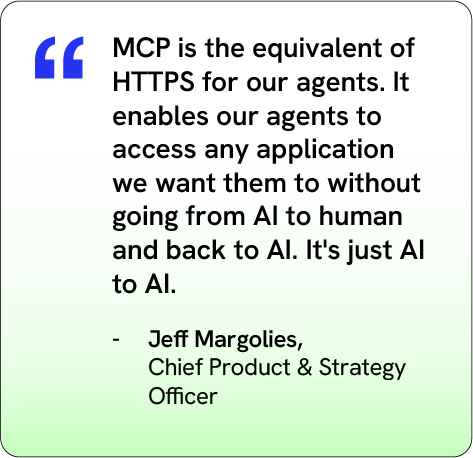
Treat MCPs as part of the identity surface, not as an application detail.
-
Bring MCP under the same governance disciplines as any privileged access path, including strong authentication, clearly defined scopes, least-privilege enforcement, and continuous monitoring of how agents are using it.
Trend 3: Data Security Will Return as a Frontline Challenge
For years, organizations deferred data classification and cleanup because it was slow and easy to deprioritize. AI has changed that calculus by making buried data immediately findable and actionable.
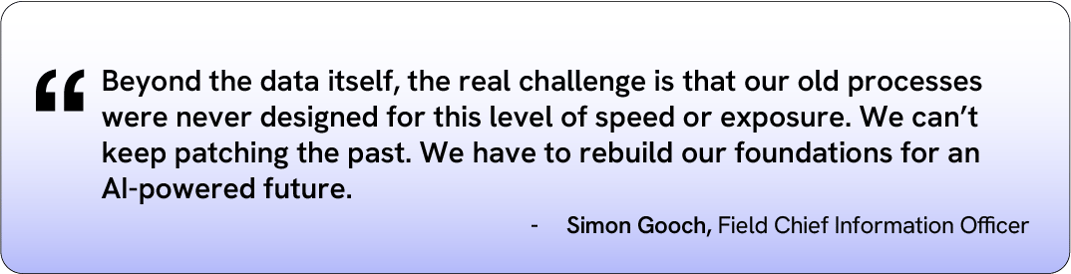
"Remember those data security and classification projects we abandoned ten years ago? Well, guess what, they will be back with a vengeance," says David Lee. "Why? AI tools are excellent at correlating large amounts of data in a very short amount of time. So, those sensitive files you created four years ago on SharePoint that you forgot about are now accessible by everyone in the company with a simple prompt."
Data Security Trend Insights
-
 AI does not distinguish between what it can access and what it should access, making data security a frontline challenge.
 -
AI is a master of correlation. A file abandoned years ago is no longer buried; it is a single prompt away from being seen by the entire company.
-
When an agent acts, it inherits the permissions of its creator, including both intentional and accidental permissions. This turns every instance of excess privilege into an instant exposure.
-
Cleaning the environment is no longer optional. This requires revisiting identity metadata, classifying access patterns, and enforcing least privilege with actual rigor.
Data Security Trend Priority Actions
Clean your data. That means:
-
Improve identity data hygiene.
-
Tighten access controls
-
Enforce least privilege
-
Establish clear ownership over who and what can access sensitive information.
Trend 4: Breaking Down Siloes and Moving Toward Zero Trust
Fragmented security was always a liability, but the speed gap created by AI makes it a crisis.
Most organizations still rely on a collection of tools that lack sufficient context sharing. That may have been manageable when threats moved at human speed, but it becomes a problem when attackers use automation and AI to probe, pivot, and escalate faster than teams can respond. Fragmented security transitions from a manageable liability to a critical risk.
Zero Trust Trend Insights
-
Important signals are often delayed or lost because a risky access pattern appearing in one system may never reach another.
-
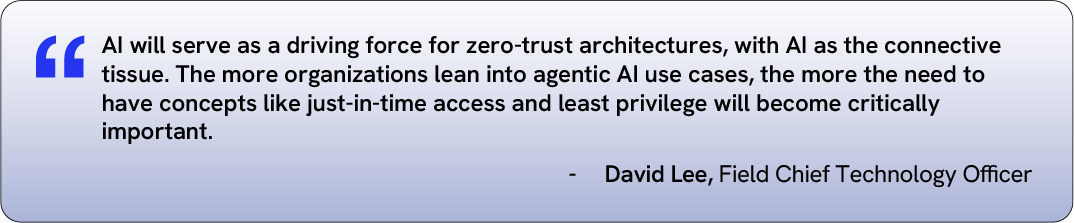
As organizations adopt agentic AI, the ability to enforce just-in-time access and least privilege becomes essential to maintaining control.
-
Security platforms must work together to consistently govern access decisions and automated workflows, fulfilling the original goal of zero trust: verify everything and assume nothing.

Zero Trust Trend Priority Actions
-
Identity is the common layer that connects disparate systems. Shift toward a unified control plane where identity context flows freely into detection and response systems.
-
To manage agentic AI, implement just-in-time access controls to ensure permissions are active only when necessary.
-
Prioritize interoperability between security platforms to fulfill the zero-trust requirement of verifying every action across the entire environment.
Trend 5: AI Brings Identity to the Center of Cybersecurity
Identity is the domain that determines who or what is taking an action and whether that action should be allowed. While AI creates new risks, it is also the only way to provide the scale required to solve the governance problems it has accelerated
AI Cybersecurity Key Insights
-
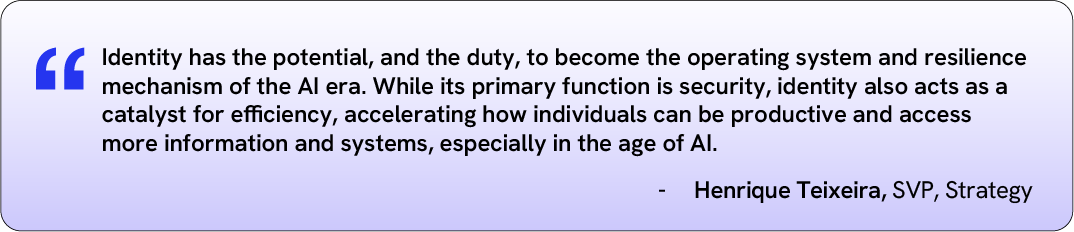
Identity is no longer just a gatekeeper; it is the strategy that enables safe, efficient AI adoption.
-
AI’s ability to correlate massive amounts of data can finally automate the discovery of orphaned accounts and unowned access that have plagued programs for years.
-
Organizations that treat identity as infrastructure will scale AI safely; those that treat it as a compliance exercise will struggle to maintain control.
AI Cybersecurity Priority Actions
-
Leverage AI tools to address long-standing governance gaps, such as identifying orphaned accounts and classifying complex access patterns.
-
Move identity management from a compliance-focused exercise to a central architectural role that governs all automated and human workflows. Building this foundation is necessary to scale AI innovation without increasing organizational risk.
Conclusion: From Experimentation to Resilience
The rapid adoption of AI has ended the era of passive identity management. The triple threat of agentic risk, governance deficits, and visibility gaps cannot be solved with legacy tools or human-speed processes.
In the AI era, identity isn't just supporting your security strategy; it is the strategy. By integrating non-human identities, unifying visibility, and enforcing adaptive security, organizations can build a system of trust that scales with the speed of innovation.


Report
Saviynt Named Gartner Voice of the Customer for IGA

EBook
Welcoming the Age of Intelligent Identity Security

Press Release
AWS Signs Strategic Collaboration Agreement With Saviynt to Advance AI-Driven Identity Security

Solution Guide