- How do I discover shadow AI and govern it?
- Who owns the agent and where are they managed?
- How do I enforce Zero Standing Privilege?
- How do I solve decision attribution and provenance?
- How do I enforce runtime access controls for data and apps?
- How do I make sure developers build agents secure by default?
Many organizations have spent the last decade building their security on an identity-based perimeter around their people: who gets access, why, and for how long.
Then a new kind of identity walked through the door. It doesn’t clock in, and it often doesn’t clock out.
Agents don't wait for a provisioning ticket. They act on behalf of employees, call tools through MCP, chain to other agents, and do all of it at machine speed. They hold real credentials and touch real data. Yet in most enterprises, no one can say with confidence how many agents exist, who owns them, or what they're allowed to do.
That raises a question every security leader should be asking: is the identity foundation we've built ready for the identities that are here now?
"Platform" is the easy part. "Purpose-built" matters.
Every vendor calls itself a platform now, so the word has stopped telling buyers much. What matters is what the platform was built to do, and whether each part of it was designed for the job it's doing.
In practice, identity security tends to take one of three shapes.
The patchwork. Separate tools cover governance, privileged access, machine identities, and now AI. Each has its own console, its own policies, and its own partial view of risk. Whether the tools were built one at a time or assembled through acquisition, the seams are where context gets lost.
The add-on. Vendors from adjacent segments, such as network, endpoint, or data security, extend into identity. They see traffic and devices well, but they don't see ownership, entitlements, or accountability.
The purpose-built platform. Identity security is the core function, not an extension. Each identity type gets controls designed for how it actually behaves, and all of them roll up into one view of posture and risk.
The difference shows up the moment you ask a hard question, like "What does this agent have access to, do with that access, and who answers for its actions?"
Why AI agents expose the gaps
Until recently, identity programs were designed around people: a hire date, a manager, a role, a quarterly access review. AI agents break nearly every one of those assumptions.
- They appear and disappear fast. Agents are created in seconds, often outside any formal process, and may exist for minutes or for months.
- They borrow authority. Many act on behalf of a human, inheriting delegated permissions that are hard to see and harder to constrain.
- Their behavior isn't fixed. The same agent with the same permissions can take very different actions depending on its instructions, including ones it was never explicitly given or supposed to receive.
- They move at machine speed. A risk that would take a person days to cause can unfold in minutes, if not seconds.
Challenges Every Organization is Struggling with Regarding AI
That's why approving an agent once isn't enough. Approved doesn't mean safe. Securing agents requires controls that act at the moment of action, not just at the moment of provisioning. Runtime authorization checks what an agent is trying to do, on whose behalf, and whether it should be allowed.
Stretching controls built for people over agents leaves gaps. So does bolting an AI tool onto the side of the stack with no connection to who owns what. Agents need security designed for agents, connected to the identity context the organization already has.
What a purpose-built approach makes possible
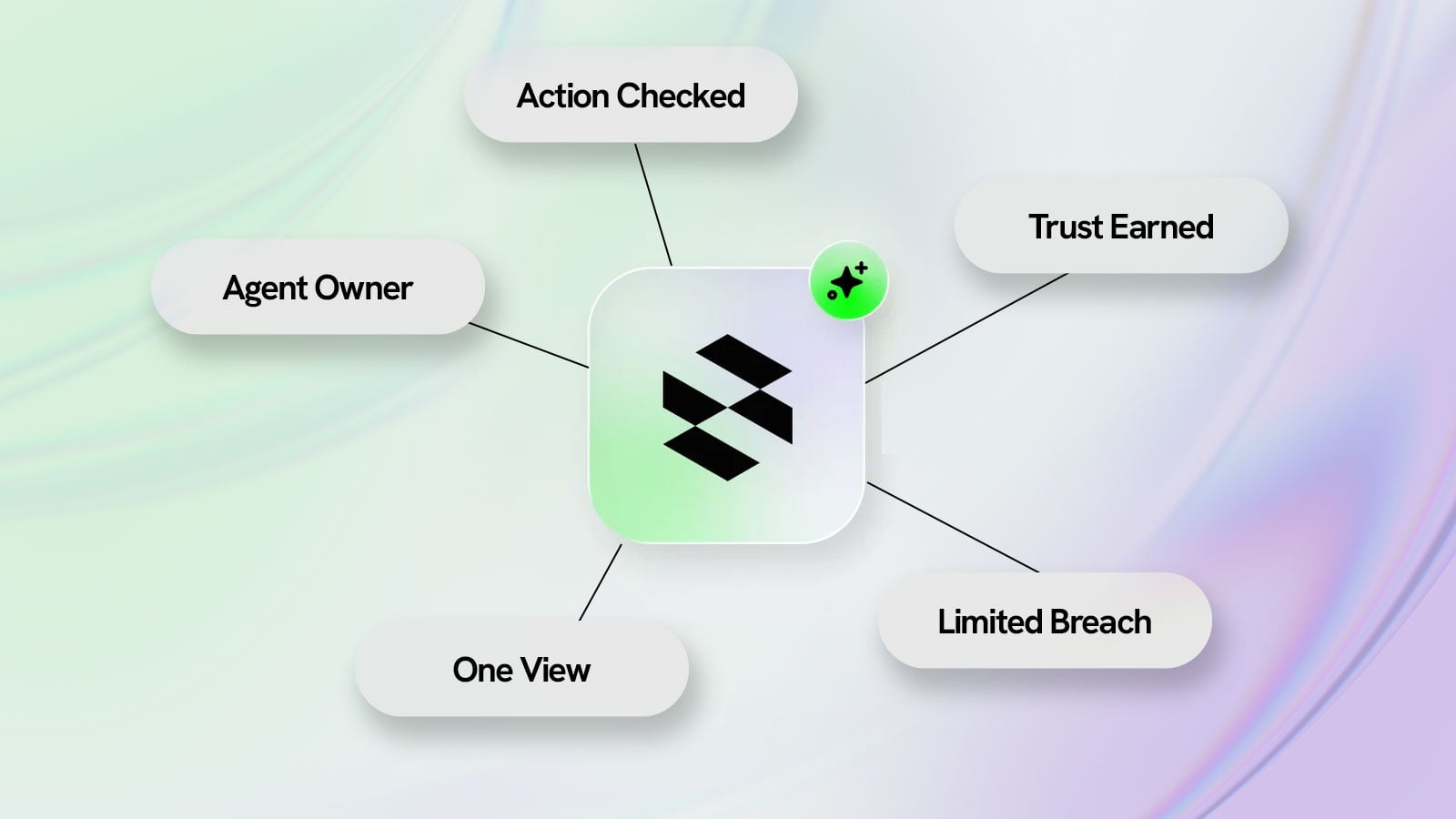
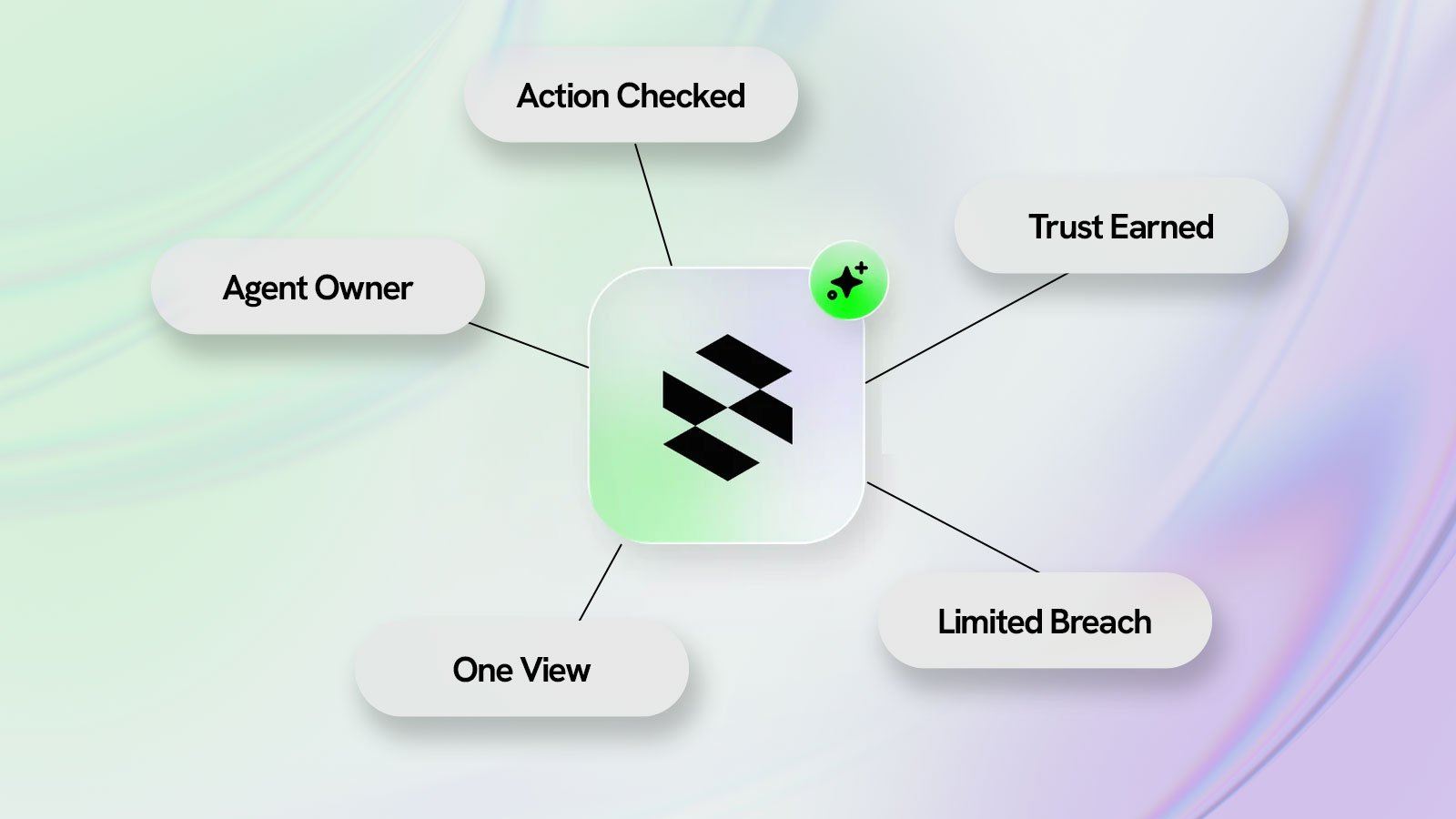
Every agent has an owner. Discovery is only half the job. Each agent ties back to an accountable human, so nothing operates as an orphan.
Every action is checked in context. Controls sit at each gateway an agent passes through, so access decisions reflect what's happening now, not what was approved months ago.
Trust is earned continuously. Agents are reviewed, recertified, and retired across their entire lifecycle, so shadow agents don't quietly accumulate.
Ensure limited breach radii. When least privilege is enforced with full context, a compromised or misbehaving agent can reach only what it truly needs.
One view of risk across every identity. Security teams see posture for AI, non-human and AI identities in one place, with the right depth for each, instead of reconciling across consoles.
Questions to ask your identity vendor
-
How does every agent get tied to an accountable owner?
- Do you authorize agent actions at runtime, or only when access is granted?
- How do you constrain the permissions an agent uses on someone's behalf?
- Can I see risk across human, non-human, and AI identities in one place?
Own it. Track it. Trust it.
Saviynt built Zuma specifically to secure AI agents and non-human identities. Zuma Insights handles discovery and ownership, Zuma Access provides control at runtime, and Zuma Governance provides oversight across the agent lifecycle. Because Zuma is part of the Saviynt Identity Platform, AI agent posture sits alongside human identity posture in a single Insights workspace.
Purpose-built where it counts. One platform where it matters.
Learn more about securing your AI with the following resources: