The world has changed significantly since cloud services became the backbone of government and enterprise operations. Geopolitical tensions, landmark legal battles over data access and privacy, and a growing recognition that digital infrastructure is national infrastructure have pushed one concept to the top of every serious technology conversation: sovereignty.
But sovereignty without identity security is an incomplete answer. You can keep data within a nation's borders and still lose control of it entirely if the system that governs who has access to it is compromised, misconfigured, or exposed to foreign authorities. Sovereign cloud and identity governance are not separate workstreams. They are two halves of the same problem.
Sovereignty is no longer a compliance checkbox. It is a strategic imperative, and identity is the perimeter it has to protect.
What does sovereignty actually mean?
The term gets used broadly, so it's worth being precise. The generally understood definition, as first established by IDC, is this: cloud sovereignty ensures that cloud environments and all hosted digital assets remain completely under the jurisdiction, control, and legal framework of a specific country or region.
Sovereignty in the cloud context has three distinct dimensions, and conflating them leads to solutions that address only part of the problem.
Data sovereignty is the principle that data is subject to the laws and regulations of the country where it is collected and stored. A citizen's health records, a government agency's communications, a company's financial transactions — these are not just bytes. They are subject to jurisdictional authority, and where they live determines who can access them and under what rules.
Technical sovereignty is about control over the infrastructure and technology stack used to process, store, and transmit that data. It asks: does the organization using this technology have meaningful oversight of the underlying systems, or is it entirely dependent on a foreign vendor's architecture and decisions? This is a fundamental consideration for business continuity planning.
Operational sovereignty goes further still. It addresses who runs the cloud service, who can access the environment, and whether the organization retains genuine control over day-to-day operations. In practice, this means transparency into how the service is managed, the ability to audit operations, and assurance that a foreign government, legal system, or corporate headquarters cannot unilaterally access or interrupt service.
Together, these three layers define what it means to truly own your digital destiny. Not just where your data sits, but who controls the technology around it.
Which brings us to the dimension that ties all three together: identity. Identity security — the management and auditing of digital identities, credentials, access permissions, and the logs that record it all — is not a separate capability sitting alongside sovereignty. It is the mechanism through which sovereignty is enforced. Knowing that your data is stored within your jurisdiction means little if a hostile actor can provision themselves an account with administrative access, or if a foreign court can subpoena the access logs that reveal your entire organizational structure.
When identity data — usernames, security clearances, biometrics, access histories — is treated as a sovereign asset and governed within the same jurisdictional controls as everything else, the model is complete. Until then, the perimeter has a gap. The success of sovereign cloud strategies depends entirely on robust identity security; without it, their core objectives and purpose are compromised.
Why the urgency is real and growing
For years, sovereignty conversations were largely theoretical. That has changed rapidly, and governments are now making concrete, costly decisions to act on those concerns.
Geopolitical dynamics have fundamentally altered how governments think about cloud dependence. Legislation such as the U.S. CLOUD Act provides American authorities with a legal basis to compel access to data stored by U.S.-based cloud providers, regardless of where that data physically resides. The ability of a foreign government or vendor to interrupt service is no longer hypothetical either. Nations are asking a reasonable question: if we rely on technology we don't control, what happens when relationships deteriorate?
The policy response is accelerating. Bavaria, Germany's largest state, recently changed its IT strategy to pursue what it calls a "sovereign basic workspace." Bavaria's Digital Minister cited the need to ensure data privacy, maintain continued access to services in a crisis, and protect the state from price increases. The move is part of a wider trend of similar shifts worldwide.
The rise of AI has added a new dimension. AI systems learn from data. When that data includes government records, citizen information, or sensitive operational content, the question of who trains the model, who can query it, and where inference occurs centers on sovereignty. Putting sensitive data into an AI pipeline operated by a foreign entity carries risks that didn't exist when the cloud was just a place to store files.
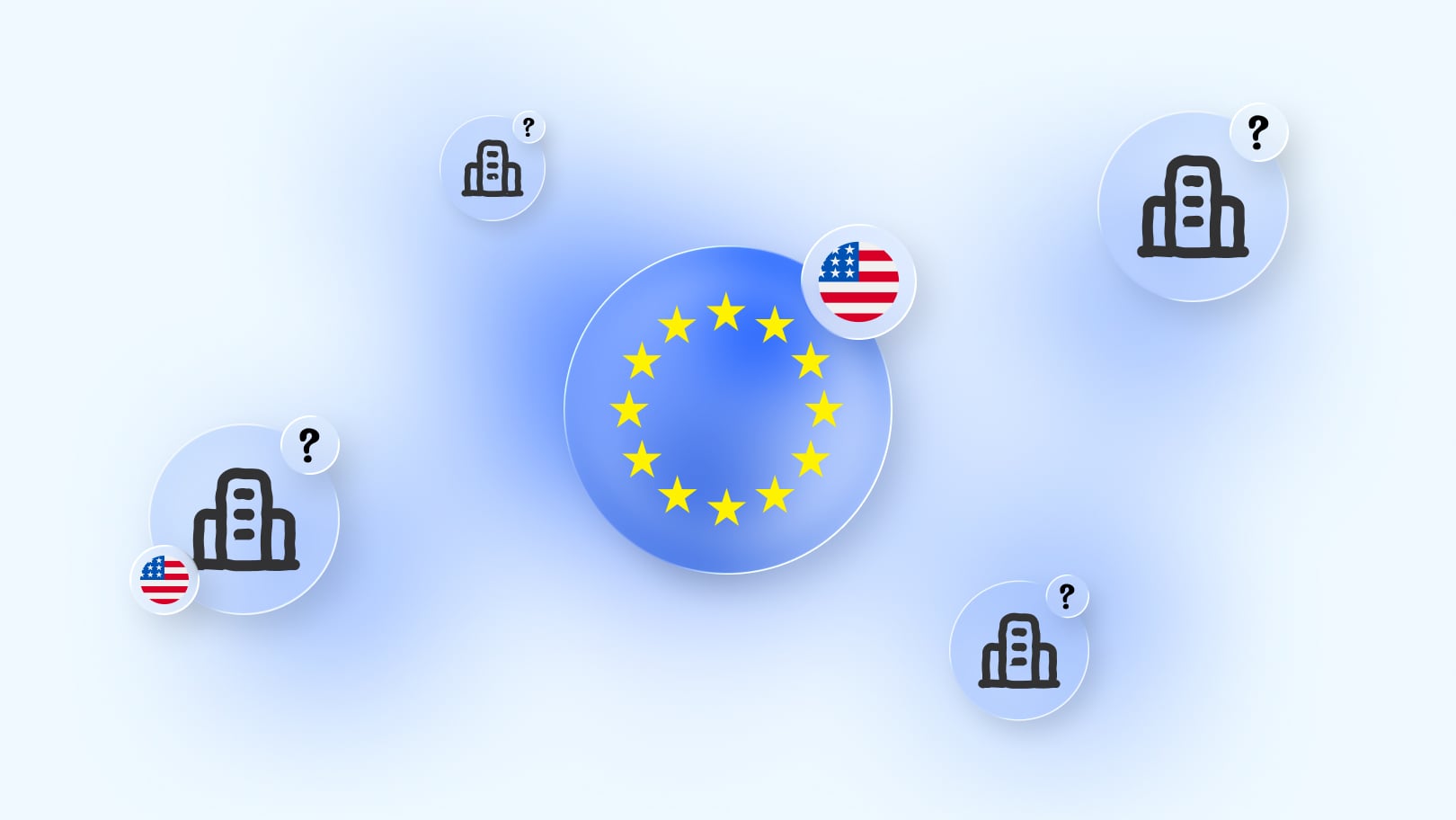
Data privacy standards have also proven unstable across borders. The annulment of the EU-U.S. Privacy Shield demonstrated that legal frameworks governments and organizations relied on for cross-border data transfers can collapse with little warning. Organizations that had structured their data flows around those frameworks found themselves exposed overnight. Sovereignty architecture built to keep data local is resilient in ways that legal agreements simply are not.
Identity itself has become a high-value target in this environment. Identity profiles are dense concentrations of sensitive PII — national ID numbers, security clearances, biometric data, and access histories that map exactly who can reach what inside an organization. Under conventional cloud models, this data may be replicated across global infrastructure, processed through shared services, and potentially subject to foreign legal demands. A sovereign cloud without sovereign identity security leaves the most sensitive, operationally critical layer unprotected.
Physical infrastructure risks have come into sharper focus as well. Incidents involving undersea cable sabotage have highlighted how critical digital infrastructure can be disrupted by state or non-state actors. If your cloud service depends on connectivity through cables that run through contested waters or vulnerable chokepoints, business continuity planning needs a sovereignty answer. Finally, tariffs and the economic case for local technology solutions have made sovereign cloud not just a security argument but a political and economic one — particularly for governments looking to support domestic technology sectors and reduce foreign dependency.
Our approach: A tiered model, not a single answer
One of the most common mistakes in conversations about sovereignty is assuming a single model can serve every customer. It cannot. A national health agency and a defense ministry have very different threat models, operational constraints, and regulatory obligations. A cloud provider that offers one sovereignty option is leaving most of its customers underserved.
Our approach is built around a tiered model, developed in close collaboration with customers, partners, and governments. Each tier is designed to address a specific set of sovereignty requirements (including identity security), and allows customers to choose the level that aligns with their needs and risk profile.
Data Residency functions as our foundational tier, available across our full portfolio. We ensure that all data, including personally identifiable information and identity governance data, remains within your chosen region and adheres to local legal requirements such as C5, SecNumCloud, and G-Cloud. By preventing content from leaving its designated jurisdiction, we safeguard your access logs, user profiles, and credentials from exposure to foreign legal authorities. Our architecture supports compliance with local data residency mandates worldwide, with active support currently available in the EU, the UK, and the US.
This is the tier with the widest adoption, and for good reason. It addresses the core requirement for most regulated organizations without requiring them to operate a separate sovereign infrastructure. Customers can verify their data location directly in our administrative tools, and EU customers who previously had data stored elsewhere have a migration path to bring their data home.
Sovereign Clouds are locally owned and operated by local citizens. FedRAMP is the U.S. government implementation of sovereign cloud. We have operated a FedRAMP-authorized cloud since 2019, which is owned and operated by a US entity, staffed by US citizens, and housed in restricted data centers within the country. This is not a compliance label applied to a shared commercial service. It is a dedicated sovereign cloud for US federal and public-sector entities, built to meet the exacting security controls required by the sector. This tier has also been widely adopted, and we continue to extend its capabilities, including support for DoD IL5 requirements covering Controlled Unclassified Information and national security systems.
Air-Gapped Clouds represent the highest tier. They are purpose-built environments for critical national infrastructure, national security agencies, and defense organizations. These are deployments that even we cannot access. Operational sovereignty is absolute. Local staff with appropriate security clearances operate the environment, which is isolated from the public internet, and data handling meets classified or top-secret requirements. We have been building these environments for years, working directly with intelligence and defense customers worldwide to deploy and support collaboration and security services in air-gapped data centers. The customer has full ownership and operational control.
What the market is asking for next
The conversations we are having with customers and governments clearly point to two areas of growing demand.
The first is sensitive data environments for U.S. federal agencies beyond the baseline FedRAMP tier. Agencies handling tax returns, sensitive PII such as health data, and Controlled Unclassified Information are looking for capabilities that go further — environments specifically engineered for sensitive government data, with enhanced controls, stricter access restrictions, and stronger compartmentalization than standard FedRAMP provides.
The second is global sovereign clouds modeled on the FedRAMP approach. Governments outside the United States are asking for the same thing the US achieved through FedRAMP: a cloud that is owned and operated by local entities, staffed by local residents, subject exclusively to local law, and completely free from outside interference. They want the functional equivalent of FedRAMP applied to their own jurisdictions, and they want it across the entire platform (not just for a subset of capabilities).
These are not distant roadmap items. They reflect the direction of the regulatory and geopolitical environment, and we are actively building toward them.
Who needs sovereign identity security — and why
Sovereign identity security is not a universal requirement. Most organizations can operate perfectly well with standard cloud identity models. But for three groups in particular, it is not optional.
Governments and public sector agencies sit at the highest end of the risk profile. Defense, intelligence, healthcare administration, and public service delivery all involve state secrets and citizens' private data. These organizations need absolute certainty that foreign actors cannot view or manipulate who holds administrative access to public infrastructure — because access to the identity layer is effectively access to everything it protects.
Critical infrastructure operators face a different version of the same problem. Energy grids, water utilities, telecommunications networks, and financial institutions are primary targets for state-sponsored cyber operations. The goal of many such operations is not to steal data but to establish persistent access — to sit quietly inside identity systems until the moment it becomes useful to cause disruption. Sovereign identity security, with its locally operated controls and jurisdictionally bound audit trails, is a structural defense against that class of threat.
Highly regulated enterprises operating in strict jurisdictions — particularly in markets like Germany, Switzerland, Australia, Singapore, India, or the Gulf states — face regulatory and commercial requirements to demonstrate that local employee and customer identities are governed within local legal frameworks. For these organizations, sovereign identity security is increasingly a condition of doing business, not just a security preference.
The common thread across all three groups is this: identity data is not just another data category. It is the map of who controls everything else. Treating it as a sovereign asset is what makes every other layer of the sovereignty model meaningful.
A trusted partner in a changing world
The thread running through all of this is trust, and trust is earned over time, through consistent investment, not promised through marketing materials.
We have been building sovereign cloud capabilities with local and global partners since before sovereignty became a buzzword. Our data residency solutions are in production. FedRAMP has been live since 2019. Air-gapped deployments exist today for some of the most security-sensitive organizations in the world. This isn't a vision slide; it's a track record. We’re honored to have been granted the most stringent security and compliance certifications from authoritative security organizations worldwide (see trust.saviynt.com).
The geopolitical environment will keep changing. Regulations will evolve. New threat vectors will emerge. What will not change is the underlying requirement: governments, agencies, and regulated organizations need to maintain meaningful control over their data, technology, and operations — and they need a cloud partner they can trust to take that seriously.
We are that partner. And we are not done building.
Stay tuned for further announcements as we continue expanding our sovereign cloud portfolio in collaboration with customers, governments, and partners around the world.