Deploying AI agents without proper governance isn’t a strategy. It's a risk.
AI agents have moved beyond experimentation. They are starting to take action across enterprise systems such as reading data, invoking tools, orchestrating workflows, and making decisions at machine speed. That changes the access problem fundamentally. Static permissions and traditional identity management tools were not designed for autonomous systems that can reason, adapt, and execute thousands of actions in seconds.
Consider a procurement agent asked to monitor inventory and flag items for reorder. That sounds harmless until the same agent starts submitting purchase orders, renegotiating supplier terms, or routing invoices for payment using permissions inherited from a broad service account. The permissions may be valid. The behavior is not. That is the gap enterprises now need to close: the gap between what an agent can do and what it should do in the moment it acts.
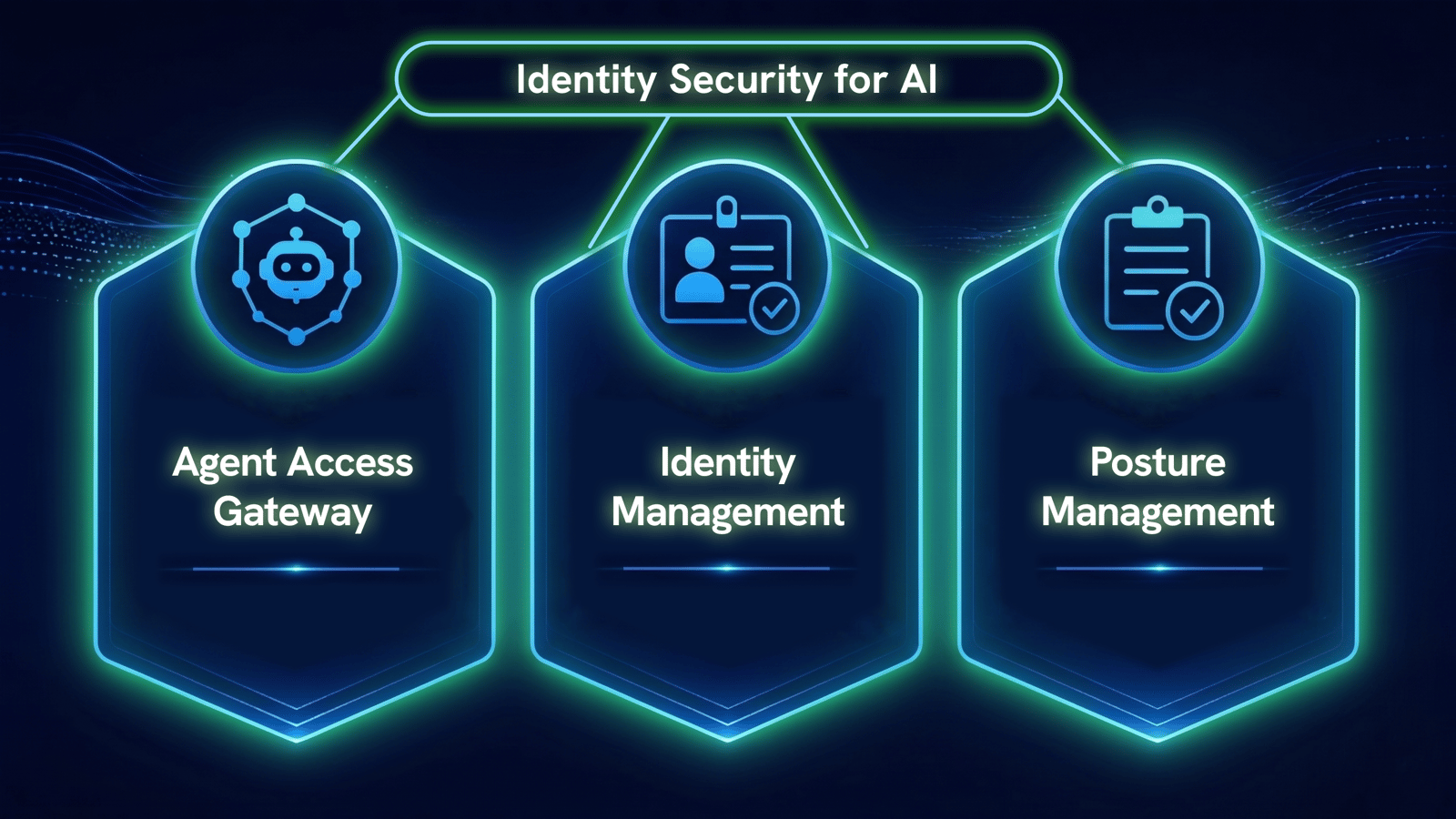
At Saviynt, we have been building toward exactly this moment. Our Identity Security for AI solution is designed as an AI identity control plane built on three pillars: Agent Access Gateway, Identity Management, and Posture Management. Together, they help organizations govern AI agents and non-human identities across the full lifecycle from creation and deployment to runtime action.
Today, we’re excited to share new capabilities across all three pillars.
PILLAR 1: AGENT ACCESS GATEWAY
Control what AI agents do — not just what they were granted access to
One of the biggest misconceptions in AI security is that permissions alone provide security. They don't. A permission granted at design time tells you an agent can access a system, application, or tool. It does not tell you whether a specific action, against a specific resource, on behalf of a specific user, is appropriate when that action occurs.
The security question is no longer simply: "Does this agent have access?"
It is: "Should this agent be allowed to perform this action, right now, in this context, and for this purpose?"
This is exactly the problem Saviynt’s Agent Access gateway is solving
Starting with design-time intent analysis
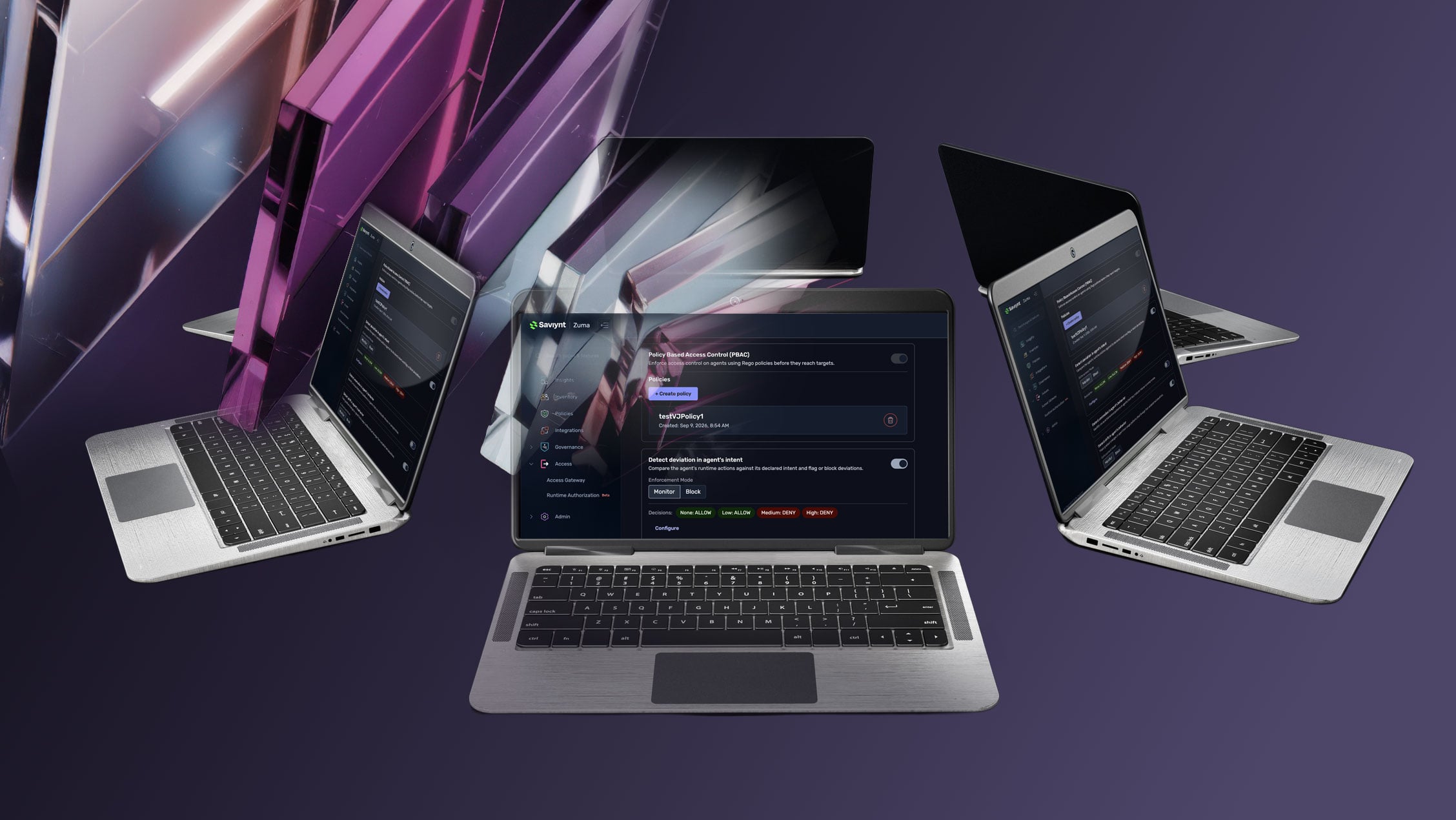
This release introduces intent validation at the point of agent registration—the earliest opportunity to establish governance before an agent ever reaches production.
During registration, Saviynt analyzes an agent's declared goals and objectives, maps them to the tools, permissions, and resources required to accomplish those tasks, and compares that intended access with what has actually been granted.
Any misalignment, excessive privilege, or unexplained access is surfaced immediately.
This matters because security issues identified during registration never become production incidents. Organizations can choose to monitor, remediate, or block agents before they are deployed.
Consider a sales operations agent designed to summarize CRM opportunities and generate pipeline reports. During registration, Saviynt evaluates whether the agent's assigned permissions align with that purpose. If the agent has also been granted the ability to export customer records, modify pricing data, or initiate outbound communications unrelated to its stated objective, those deviations are flagged for review before deployment.
Permissions still define what an agent can do. Intent analysis validates whether those permissions align with what the agent is actually supposed to do.
What's new in Agent Access Gateway
- Design-time intent analysis — Evaluates agent objectives during registration, maps them to required tools and permissions, and identifies deviations from granted access.
- Deviation detection and control — Detects over-privileged or misaligned agents and enables organizations to monitor, remediate, or block them before deployment.
- Policy-driven onboarding — Enforces alignment between agent intent and granted access as a native part of the registration workflow.
- Developer-ready enforcement — SDK-based integration to embed policy validation directly into agentic workflows from day one.
- Foundation for runtime authorization — Establishes the architecture required for future real-time authorization and policy enforcement as agent ecosystems mature.

For every violation, Saviynt provides detailed insights into the detected intent, associated risk level, and policy rationale—enabling teams to understand and remediate any unintended drift.
PILLAR 2: IDENTITY MANAGEMENT
Govern both sides of the AI interaction — who can access your agents, and what your agents can access
As AI agents become embedded in enterprise workflows, two distinct governance problems emerge simultaneously.
- Who is authorized to invoke an agent, delegate work to it, or interact with its outputs?
- What is an agent authorized to access in order to complete that work?
Both matter and must be governed.
Saviynt calls these inbound and outbound access controls — and with this release, identity governance principles are enforced across both.
Inbound access
Inbound access governs humans or apps interacting with Agents: In this release we have delivered the capabilities for humans - when a user wants to invoke an agent, delegate a task to it, or consume its outputs. Any user can now request access to an AI agent through the same approval-driven workflow used for every other enterprise resource — with the same controls, the same audit trail, and the same accountability.
Without inbound governance, AI agents become unmonitored interfaces into sensitive workflows. Anyone who can reach an agent can use it.
Outbound access
Outbound access governs the agent side: which applications, data, APIs, and enterprise resources an agent is permitted to use to complete its work — and under what conditions.
This access is mediated through the Agent Access Gateway. The Gateway acts as a policy-enforced broker: only tools that have been explicitly published through it are discoverable by agents, and access to those tools is bounded by governance policy. Agents cannot reach enterprise resources directly or outside defined controls. The Gateway determines which tools are even available; outbound access governance determines how and under what conditions they are used.
Without outbound governance, agents become over-privileged execution layers — accumulating access across enterprise systems with no structured controls on how that access is exercised.
One unified identity security model
Together, inbound and outbound controls establish something the enterprise has needed since agents arrived: a coherent identity security model for AI.
An agent's access to downstream applications, data, and tools is governed through structured requests, approvals, and least-privilege enforcement — the same rigor applied to every other privileged identity in the environment, and in some cases more. The Gateway enforces a controlled execution perimeter so that neither the humans invoking agents nor the systems agents reach operate outside defined policy.
AI agents are not a special case. They are privileged identities. Govern them accordingly.

Saviynt lets users request access to AI agents through the same approval workflow as requesting access to other resources.
PILLAR 3: POSTURE MANAGEMENT
Act Immediately Remove Access from Troublesome AI Agents
Governance is not just about authorization. It is also about response.
When an AI agent behaves unexpectedly or needs to be paused while an issue is investigated and security teams need the ability to act instantly.
Saviynt addresses this with a delete switch. This posture management capability immediately deletes the agent itself and revokes an agent’s access across all connected gateways. At the same time, it preserves the agent’s prior access configuration for audit and analysis purposes.
This is critical for real-world security operations. It gives teams a way to contain risk fast, without waiting for a lengthy review cycle while exposure continues.
In AI environments, speed matters. A human account may take hours or days to cause damage
In addition to the enhancements to Saviynt Identity Security for AI we are also thrilled to announce our availability of our identity verification capabilities.
Expanding ecosystem coverage
Effective governance must extend across the entire AI stack—where agents are built, where they execute, and where they take action.
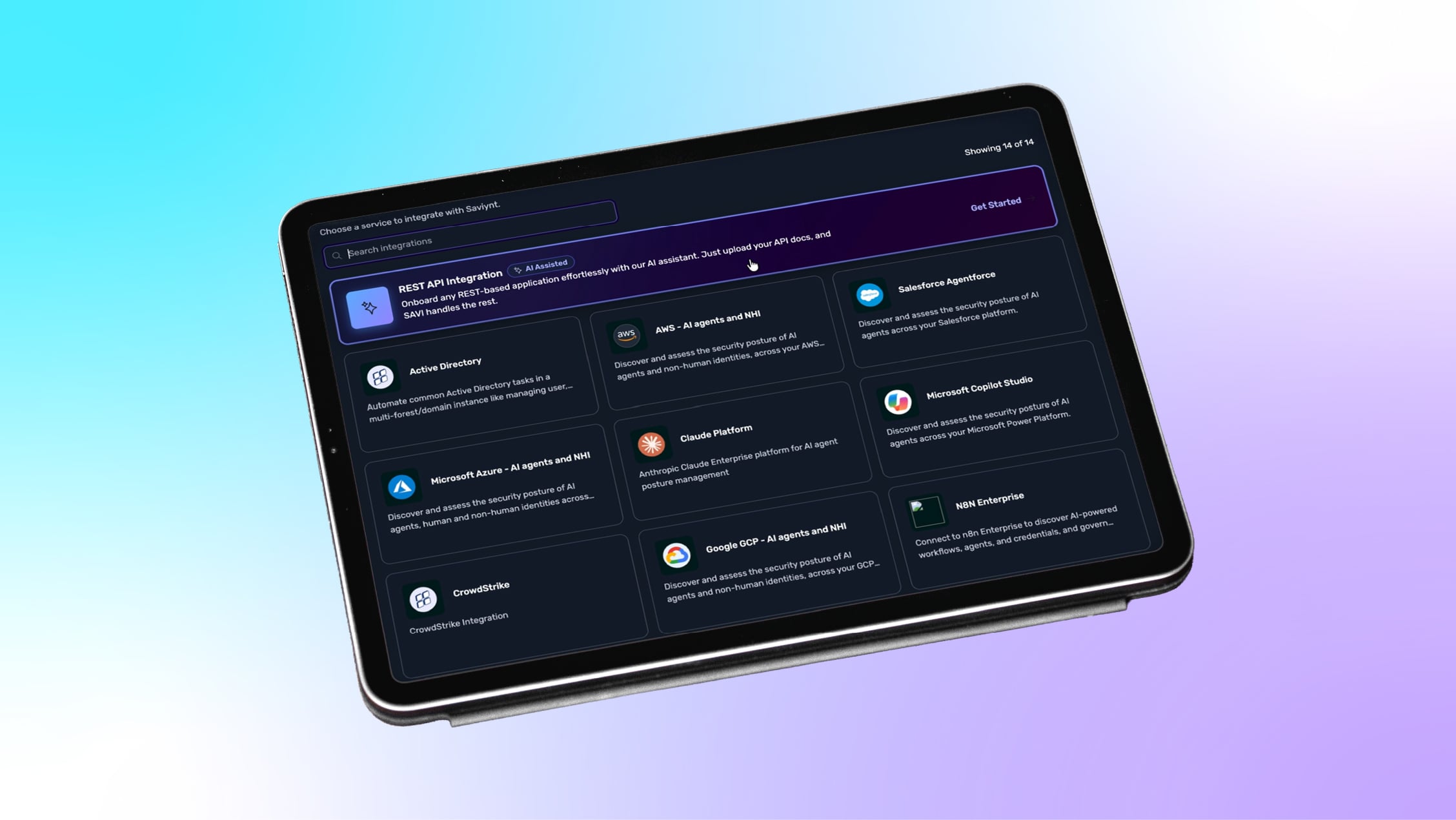
This release expands Saviynt's native ecosystem coverage with integrations for Microsoft Foundry, N8N, Snowflake Cortex, and additional AI platforms, helping organizations govern AI agents consistently across the environments where enterprise AI is being developed and deployed.
Every identity behind every action is verified
Agentic environments also introduce a deeper identity challenge: trust.
Traditional identity systems were designed primarily for human users. But AI-native environments involve humans, non-human identities, and AI agents acting on behalf of one another in increasingly complex delegation chains.
To support that reality, Saviynt has introduced new identity verification capabilities designed to strengthen identity assurance and reduce impersonation risk. For human identities, these capabilities include biometric scanning, selfie photos, liveness detection, and support for more than 4,000 government-issued document formats across more than 177 countries.
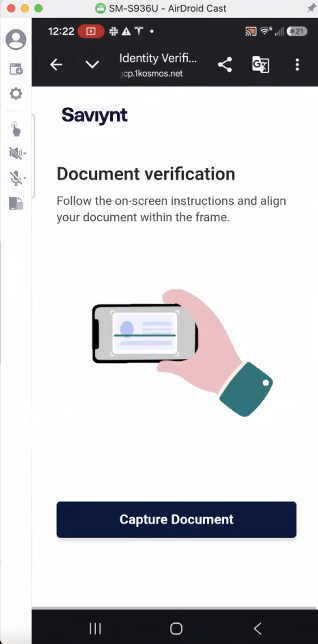
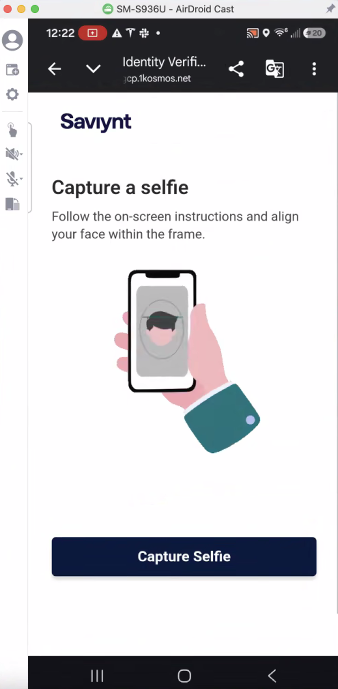
Saviynt identity verification places the same level of rigor on verification of AI identities as human identities using cryptographic identity and tokens.
As AI increases the scale and sophistication of fraud, social engineering, and unauthorized access attempts, stronger identity assurance becomes foundational—not optional.
A Single Governance Model Across the AI Stack
AI security today is quickly fragmenting into point controls: content filters, gateways, model controls, tool connectors, and policy overlays. But enterprises need something more coherent.
They need a single governance model across the AI stack.
Saviynt provides AI agent visibility, management, governance, and access control across the environments where agents are built, where they run, and the enterprise applications where they take action. With this launch, we are extending native integration coverage to include Microsoft Foundry, N8N, Snowflake Cortex, and more
This matters because identity security is only as strong as its reach.
If governance does not span the full lifecycle of the agent, from creation to runtime to remediation, then the control plane is incomplete.
AI agents are already operating in your enterprise. The question is whether your identity security program is keeping pace. We'd love to show you what we've built — visit us at booth 501 at Identiverse, or learn more at saviynt.com.