The Identity Explosion
- More Systems and Hybrid Deployment
- Agents As a New Identity Type
We have more identities, more identity types, and more systems integrated into the identity and access management (IAM) feature set than ever before. From workforce (B2E) to external (B2C and B2B) and non-human identity (NHI) covering workloads and machines. The rapid rise in AI adoption has also created new requirements for agentic identity and access management.
As a result, existing IAM technology, processes, and integration patterns are often unable to support the security, productivity, or revenue-generating objectives of the modern business. This creates a measurable impact on a broader array of stakeholders, from application owners to compliance, security, and operations.
Modern enterprise challenges, such as cloud-first integration, hyper-competitive markets, and complex supply chains, are being dwarfed by the recent rise in AI adoption.
Not all AI is the same, of course, but the breadth and depth of capability, from simple machine learning tools to entirely autonomous agents, is growing constantly. However, one thing is clear: the productivity benefits and expanded use case potential of AI-based technologies cut across all sectors and geographies.
The rapid evolution of concepts and technologies like MCP, RAG, and agentic AI has placed greater emphasis on two fundamental security pillars: identity and data access. In many respects, AI has amplified the existing vulnerabilities across the core technology landscape. Gaps in how we handle everything from identity data, hygiene, and permissioning to runtime data confidentiality and behavior monitoring are becoming increasingly apparent.
To that end, how can organizations keep up with identity risks whilst reaping the benefits of this new AI era? The current security and identity gap for AI is large and requires a new concept of agentic identity.
Agentic identity is not only a new identity type that deserves first-class attention, but also a multiplier of existing risk and vulnerability in the human-centric world of NHIs and workloads. The AI era contributes to the acceleration of decades-old NHI problems in cloud apps:
- High scale & growth
- No authoritative source
- Static credentials stored insecurely
- Long-standing privileges
- Seeing identity as simply a credential management problem, lacking ownership, governance, monitoring, or access management enforcement
Organizations have invested heavily over the past 2 years to improve NHI discovery and governance, with the strategic aim of applying automated protection and control steps linked to changes in application design and compliance.
However, traditional NHIs created in the cloud era are no longer the only new type of identity that needs to be managed. Agentic identities are different from NHIs because at times these agents perform autonomously and alter their behavior more continuously. Agentic identities combine NHI risks alongside the typical risks often seen in the human-centric IAM world, and new types of risks:
- Often carry excessive permissions with broad system access like humans
- Both capable of inheriting “on behalf of (OBO)” permissions from humans or running with its own permissions
- Logically capable of bypassing simple policy-based guardrails
- Lacks accountability for its actions
- Complex and non-deterministic behavior
The result is a compounded risk profile. Excessive privilege becomes harder to constrain because useful agents typically require broad contextual access to perform their tasks; identity sprawl accelerates because vibe coders can create new agents at any time, and agents can create or invoke other agents and tools autonomously; and governance complexity increases because traditional IAM controls were designed either for predictable workloads or accountable humans.
Consequently, agentic identity magnifies existing IAM problems such as long-standing privileges, unsafe storage of static credentials, privilege creep, orphaned access, credential proliferation, and visibility gaps, while introducing new challenges around discovery, inventory and observability, behavioral trust, ownership, delegation chains, runtime authorization, and autonomous decision accountability. So not only have organizations got to analyse and improve human-centric concerns, they now need to complete that in parallel to being able to roll out AI technologies securely.
Why Identity Is Now The Control Plane
- IAM as Foundational for Security
- Thinking in End-to-End Lifecycles
As organizations need to contend with a broader array of identity types, challenging business requirements, and an increasingly changing threat and technology horizon, the traditional pillars of technical security have become more porous. The design, operational ownership, and budget for endpoint, data, and network security have changed significantly over the past decade. Strategic shifts to cloud-delivered infrastructure and applications, coupled with a more mobile and API-focused approach for service delivery (all designed within a zero trust paradigm), have entirely altered the security landscape.
The evolution of concepts such as endpoint security, extended detection and response, software-defined networking, the secure edge, data classification, and per-object confidentiality has made it necessary for IAM to function effectively whilst integrating bidirectionally. Concepts like ZTNA embed identity controls for authorization at the network layer.
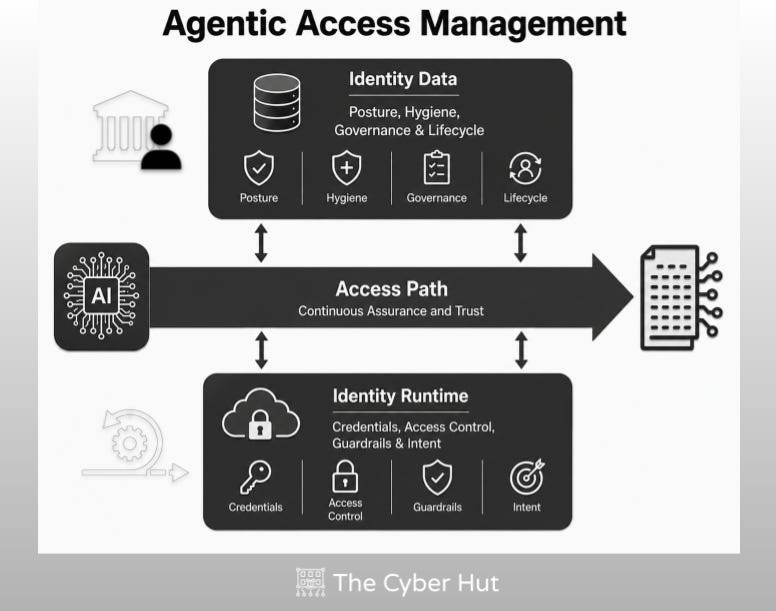
That integration of the identity data layer (focused on profiles, permissions, and policy) alongside the identity runtime security layer (detecting and protecting post-authentication), with concepts like risk signaling (supported by protocols like CAEP), provides a foundation for end-to-end security controls that have an emphasis on behavior, intent, and observability.
Because this type of identity context is so crucial for enforcing decisions in endpoints, networks, applications, and databases, it is fundamental to consider the key performance indicators (KPIs) for technologies such as data security or privacy that are heavily reliant on getting IAM “right”.
The costs are not just numeric but span across operational inefficiencies, non-compliance and increased risk.
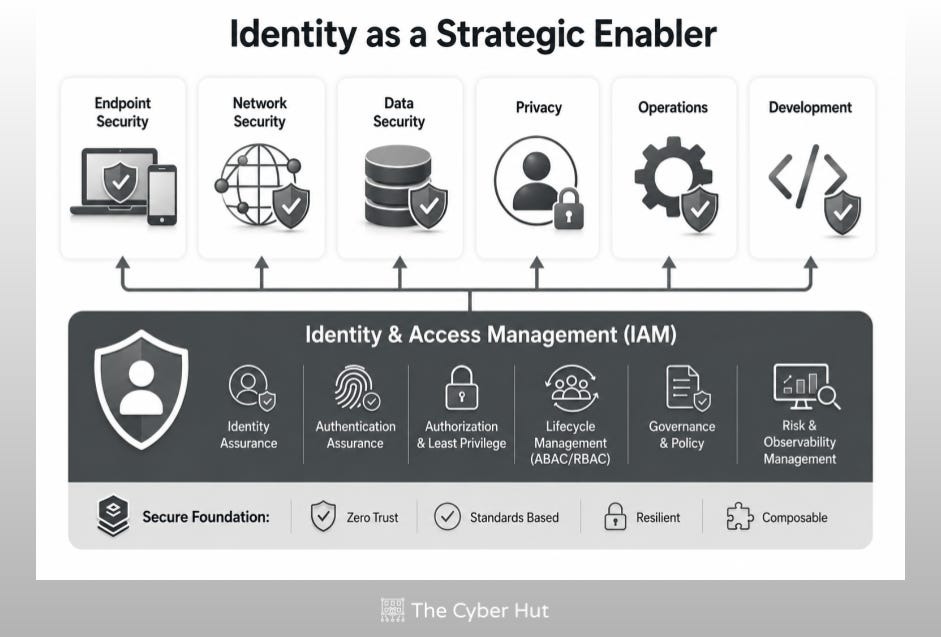
A second consideration is that the IAM foundational layer is not just strategic; it must also expand both vertically and horizontally. Horizontally, to include every part of the identity lifecycle — from secure onboarding and verification to just-in-time access and observability of actions. The individual sub-systems and flows that support those life cycles need not be one platform, but they must integrate to reduce blind spots, share risk, and improve contextual decision-making.
The vertical integration consideration is that these control pillars need to extend to all kinds of user populations: humans in the workforce, B2B, B2C, as well as NHI and agentic identities.
Evolution for the AI Era: Data & Runtime
- Analyse Agent Posture and Governance
- Apply Runtime Controls
- Deliver Trusted Access Path
So, with agentic identity as a new requirement and IAM as the strategic enabler for digital technology success, we must consider how to deliver a control plane that meets more challenging functional and non-functional requirements.
Understand Agentic Identity Posture
The impact is rapid adoption, and as a result, many organizations are already struggling to adapt and understand usage and coverage requirements. Shadow AI and shadow access within MCP, RAG, and SaaS delivered models is a significant concern. This amplifies the need for an initial set of capabilities which can help to:
- Discover identities from AI deployments
- Identify agent access to high-risk assets
- Develop identity classification and visualization
- Calculate identity risk
Organizations must understand their landscape first, before embarking on a risk assessment and security controls selection process. This will entail both outbound usage of third-party sources (where their organisational data is going) alongside finding what agents are doing against the organisation’s high-risk assets and data sources.
From there, classification, permissions risk, and threat likelihood can be used as a foundation for governance and control.
Saviynt supports this early stage of identity posture management via their unified view for visibility and intelligence, which includes humans in the workforce, external users, privileged users, and non-humans and agents. A single entry point lets operators understand the existing provisioned landscape, apply risk assessment and heat maps, and assign agents and NHIs a classification for further controls enforcement. The concept of a trusted registry allows agents, MCP servers, tools, and connections to be continuously discovered and in turn evaluated for configuration and access patterns.
Identify Ownership and Apply Governance
A key concern relating to both NHI and agentic identity is the frequent lack of an authoritative source. In the human-centric world, this is often anchored in HR. In B2B and B2C worlds, lineage based on invitation, self-assertion, and attribute-source triangulation helps provide identity assurance.
In the agentic world, creation can be distributed, amplifying the rise and risk of “orphans”. It is important to be able to assign an owner to all agentic identities (See recent research note by The Cyber Hut on Agentic Ownership)
Capabilities for this will vary but will include a composite approach based on log analytics, blended identity (tying human identity provider interactions and tokens to associated agents), sponsorship modeling during agent creation, and AI-assisted review processes.
The Saviynt timeline concept of their unified view helps to visualise changes to identity objects — including when they were created, ownership changes, and permission changes — providing an end-to-end lineage for identity data integrity. This allows organizations to support governance capabilities across the entire agentic lifecycle (cradle to grave) from within the same Saviynt platform used for humans.
Ownership not only enables concepts like traceability and audit for post-event analysis, but also supports effective lifecycle management. In the B2E world, IAM lifecycles are well known and implemented by connector management, access request, and IGA fulfillment flows. How can those concepts be applied to the agentic world? If an employee leaves an organisation, what should happen to their associated agents? Should they be removed, transferred to an employee, or recreated? Flexibility is required here, but without ownership, risk and safety are impacted.
Select Runtime Security Controls
Access management (AM) for human-centric identities has matured into identity data and identity runtime constructs. Data refers to the profiles, permissions, and policies that make up the relatively static risk and governance position for what the identity is and what it can do. Identity security posture management (ISPM) and identity governance and administration (IGA) capabilities deliver a secure running state for this.
- Design agent permissions via the principle of least privilege
- Assign via just-in-time request fulfillment
At runtime, when the identity is “used”, we need to consider policy-based access control (PBAC), with both decision and enforcement points using context and real-time intelligence that will leverage the permissions data managed in the secure running state. Whilst these are solid starting points, we need to extend this further with respect to agentic identity.
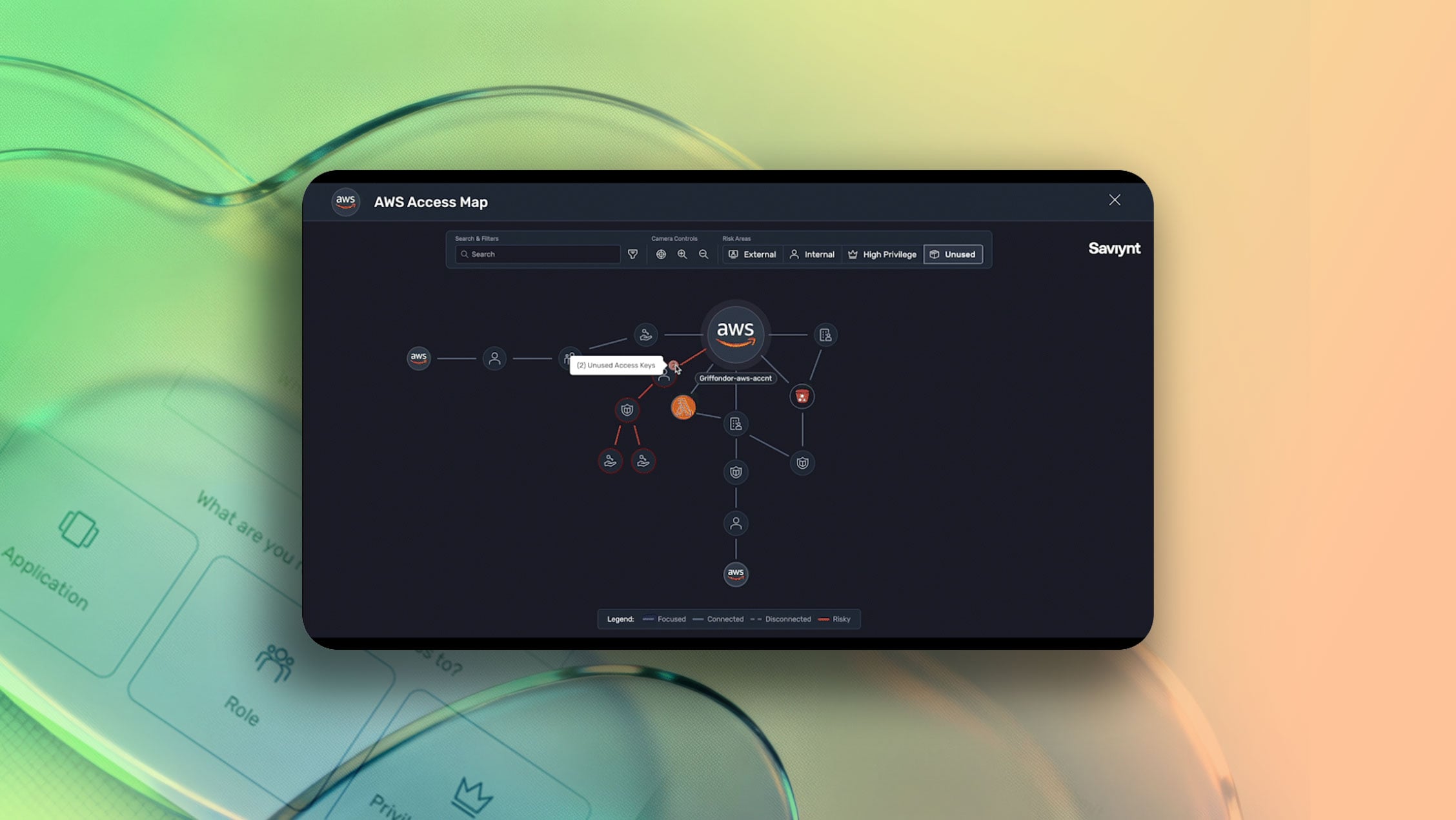
From a Saviynt perspective, this fits into their “Access Path Intelligence” narrative where they look to visualise the entire end-to-end access an agent has — from LLMs to MCP and related tools.
Access visibility for agents is quite different to that of humans, as agents are, by design, non-deterministic actors with unpredictable behavior due to self-optimization. Applying the principle of least privilege (PoLP) and zero standing privileges (ZSP) helps reduce the identity data attack surface. Saviynt tackles this with support for just-in-time (JiT) access request fulfillment for both people and agents once they are owned. Removing permissions until they are needed not only reduces potential for lateral movement, but also improves compliance posture.
Even as we reduce the identity data attack surface, we must also extend our thinking to include runtime access control (which considers permissioning) alongside context, intent, and behavior. With respect to intent analysis, we aim to uncover differences between expected and actual outcomes and whether any drift toward an unsafe action may occur. Guardrails, which act as the behavior boundaries, should also be considered with respect to tool access and sub-command execution in order to avoid the classic “rm -rf” bash command, for example.
- Consider guardrails for prompt, ingress, and egress filtering
- Monitor intent for drift and sequencing towards unsafe actions
Analyst Comment - Saviynt Approach
Saviynt delivers an end-to-end capability with respect to agentic identity security. Their history with respect to human-centric governance provides mature capabilities with respect to posture, hygiene, and lifecycle management. The new approach includes a separation into three pillars they call Insights, Governance, and Access — with Access being the latest new entry for the vendor.
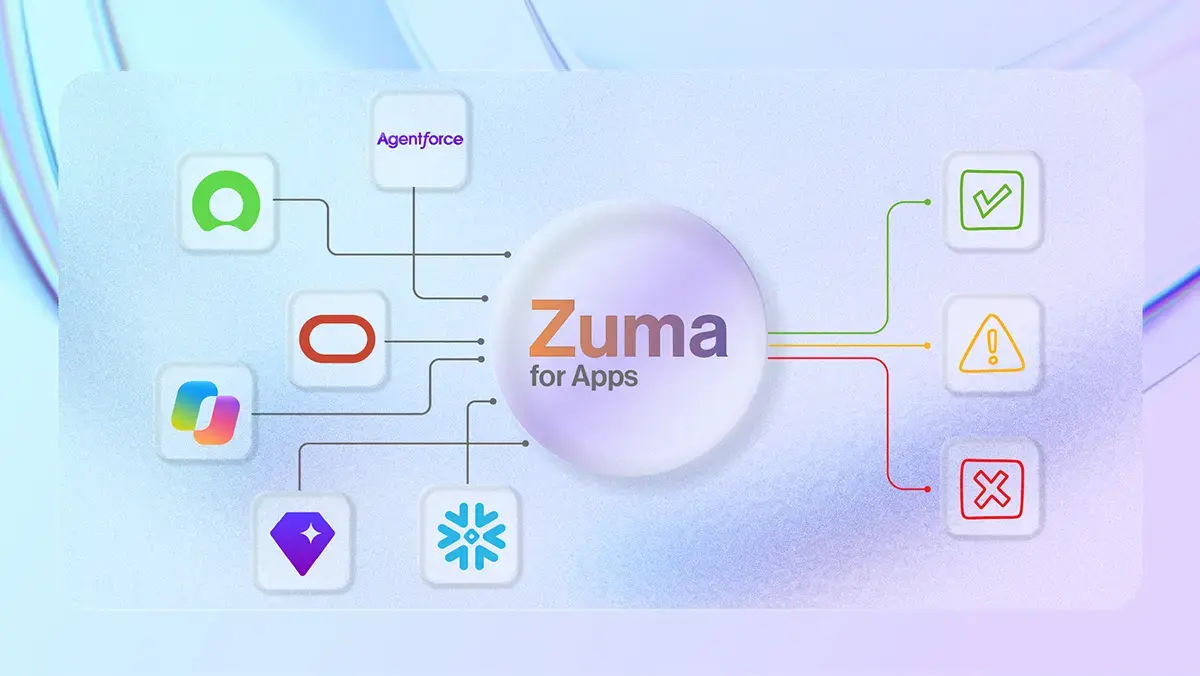
The Zuma Insights pillar delivers ISPM capabilities that support initial discovery and risk analysis, and help move toward continuous compliance rather than relying on periodic audits and assessments. AI adoption is too rapid for periodic review.
The Zuma Governance pillar includes lifecycle management capabilities that extend beyond the human and link changes from the people-focused world into the agentic one. The classic joiner-mover-leaver functions have significant impact on identity data risk and people-focused change - be they project changes, promotions, or terminations — and Saviynt supports the ability to extend those lifecycle functions in line with agentic ownership rules.
Their “trusted registry” provides a central entry point to continuously evaluate the usage and risk associated with each agent. The life cycle management of the agent is strongly in focus, with the ability to assign ownership, scoped permissions, least permissions, and a succession plan during joiner-mover-leaver (JML) changes.
As the need for both identity data and identity runtime capabilities increases across both humans, non-humans, and agents, the ability to integrate and share “universal identity data” across different integration points becomes critical. Saviynt supports broader access via their MCP server with natural language processing (NLP) capabilities that expose complex identity workflows and posture information to non-technical stakeholders and distributed systems.
Lastly, with respect to the runtime controls, Saviynt provides multiple options here. Their Agent Access Gateway, as part of Zuma Access, supports the control points needed to provide dynamic and adaptive access at scale. This supports a policy-based access model that determines both the inbound credentials and authentication requirements an agent needs, along with the outbound downstream data, tools, and actions the agent is permitted to use.
They have a strategic focus on expanding further into intent management, and have added capabilities that can evaluate operational context, effective permissions, and risk profile before authorizing task execution, stopping privilege abuse and anomalous actions, through an Agent Access Gateway, delivering intent-aware runtime authorization (IARA).
Summary
As AI agents become widespread, identity must evolve into the strategic control plane for the AI era. Agentic identities combine the scale and automation of non-human identities with the dynamic behavior and delegated authority of human users, creating new risks around permissions, governance, runtime access, and behavioral trust. To address this, organizations need integrated identity data and runtime controls spanning lifecycle management, policy-based access, guardrails, observability and intent analysis, positioning IAM as foundational to securing modern AI-driven environments. Saviynt supports a range of use cases that enable human, non-human, and agentic identity risk reduction.
Ready to discover, govern, and protect AI at scale? Start your free trial of Saviynt Zuma or book a personalized demo today.
About The Author
Simon Moffatt has over 25 years experience in IAM, cyber, and identity security. He is the founder of The Cyber Hut — a specialist research and advisory firm based out of the UK. He is the author of CIAM Design Fundamentals and IAM at 2035: A Future Guide to Identity Security. He is a Fellow of the Chartered Institute of Information Security, a regular keynote speaker, and a strategic advisor to entities in the public and private sectors.