1. AI is accelerating cyber risk, which makes weak identity and access controls harder to defend.
The Five Eyes AI cyber guidance frames AI-accelerated cyber risk as a reason to strengthen foundational controls. Privileged access deserves close review because standing privileges leave powerful access available before it is needed and after the work is done. Modern PAM helps reduce that risk by removing persistent access, enforcing just-in-time privilege, and governing privileged access across human, non-human, cloud, and AI-connected identities. That requires treating privilege as a spectrum, not a fixed category. Some identities hold obvious administrative power, while others carry narrower access that can still create material risk if misused, compromised, or combined with other permissions.
Key Takeaways
2. Privileged access deserves close review because compromised accounts, roles, and identities can create immediate business risk.
3. Standing privilege expands the attack surface by leaving powerful access available even when it is not needed.
4. Zero Standing Privilege reduces risk by making privileged access temporary, approved, and scoped to the task.
5. Modern PAM must govern privilege across every identity, including human, non-human, cloud, service, and AI-connected identities.
AI is compressing the cyber risk timeline
The Five Eyes AI cyber guidance treats AI-driven cyber risk as a business resilience issue that organizations need to address now.
The urgency comes down to speed. AI helps attackers find exposed systems, analyze weaknesses, generate exploit paths, and adapt tactics faster. Reconnaissance can happen on a greater scale. Attack methods can be tested and refined more quickly. The window between exposure and impact gets smaller.
That puts more pressure on defenders. Security teams have less time to detect weak signals, validate risk, patch systems, and contain suspicious activity. Controls that were already manual, inconsistent, or dependent on periodic review become harder to defend when threat activity accelerates.
Rather than starting with AI-specific tools, the guidance points leaders back to foundational controls that need to hold up under faster conditions: identity, access, asset visibility, logging, monitoring, and response.
For identity and security teams, privileged access is one of the most important areas to reassess. Privileged accounts, service accounts, cloud roles, and administrative access paths enable users and systems to change configurations, access sensitive data, and affect critical workflows. When that access is persistent, excessive, or poorly governed, it gives attackers a path to use once they get a foothold.
AI makes weak privilege models harder to defend because attackers can find and use access paths faster. Modern Privileged Access Management must reduce standing privilege, limit access to what is needed, and remove unnecessary access before attackers can exploit it.
Why privileged access matters more in an AI-accelerated threat environment
Privileged access has always been a high-value target. A compromised admin account, service account, cloud role, or automation identity can give attackers the ability to change configurations, access sensitive data, disable controls, or move deeper into the environment.
AI increases that risk by helping attackers find and use those paths faster. They can analyze systems, map permissions, identify weak points, and refine exploitation attempts with less friction. Even a hidden access path can become useful once an attacker finds it.
Static access models make the problem worse. Privileges often remain active long after the work is done. Access builds up as roles change, projects shift, and systems evolve. Dormant accounts and non-human identities can retain powerful permissions without clear ownership or regular review.
That makes Privileged Access Management a practical AI security guardrail. PAM defines where elevated access is allowed, who or what can use it, when it can be used, and how long it lasts.
The old question, “Who has admin access?” is too narrow. The better question is: “Who or what has enough access to cause harm if compromised?” That is the privilege spectrum in practice. Some identities have full administrative control. Others have scoped access to sensitive data, workflows, configurations, or automation paths. Both can be privileged if their access creates business impact. Modern PAM needs to answer that question across human users, service accounts, workloads, cloud identities, and AI-connected workflows.
Reduce your attack surface by removing standing privilege
The Five Eyes guidance recommends reducing the attack surface. In Privileged Access Management terms, that means reducing unnecessary privileged access paths.
Standing privilege creates an always-on opportunity for attackers. Access exists before it is needed, often persists after the work is done, and can outlive the person, the workload, or the business purpose for which it was created.
Zero Standing Privilege replaces permanent elevated access with approved, temporary access. Privilege is created or elevated only when there is a legitimate need, scoped to the task, system, and context, and removed when the session or task ends. In some cases, the privileged account can be created for a specific task and deleted automatically after use.
This reduces the number of open paths attackers can use and limits the blast radius if an identity is compromised. For organizations responding to AI-accelerated cyber risk, the goal is to eliminate unnecessary privilege before it becomes an attack path.
What Zero Standing Privilege looks like in practice
Zero Standing Privilege starts with visibility. Organizations need to know where privileged access exists across admin accounts, service accounts, cloud roles, automation identities, and other non-human identities.
From there, they can remove persistent access where it is not required. Privilege should be created or elevated only after a request, approval, or policy check confirms a legitimate need. Once the work is complete, the privilege is removed, or the temporary account is deleted.
Access should be limited by time, task, and system. A user or workload should receive only the access needed for a specific action, in a specific environment, for a specific period. During that session, privileged activity should be monitored so teams can see what happened, not just who requested access.
The same model should apply to human and non-human identities. Zero Standing Privilege reduces unnecessary access across the full identity surface.
Strengthen identity and access controls with modern PAM
The Five Eyes guidance also calls on organizations to review and strengthen identity and access controls. Modern Privileged Access Management supports that work by focusing on the access that can create the most damage if misused.
A modern PAM program should help organizations discover privileged accounts and access paths, govern privileged identities, enforce least privilege, provide just-in-time access, monitor privileged sessions, and remove access that is no longer needed before it becomes an exposure.
That moves PAM beyond credential vaulting. Modern PAM controls how privileged access is requested, approved, used, monitored, and removed across the full identity lifecycle.
Monitoring also adds important context to identity risk. Session activity, access patterns, policy exceptions, and unusual behavior can help security teams understand when a privileged identity is behaving normally and when it may need closer review. That context makes privileged access decisions stronger because they are based on how access is actually used, not just how it was originally assigned.
As AI accelerates threat activity, that lifecycle view becomes more important. Organizations need to know which identities have privilege, why they have it, how they use it, and when it should go away.
Why legacy PAM models fall short
Legacy Privileged Access Management programs were built around a more predictable model of privilege: known administrator accounts, stored credentials, and human users logging into sensitive systems.
That model still matters, but it no longer covers the full risk surface. Privilege now exists in cloud roles, service accounts, automation scripts, DevOps pipelines, non-human identities, and AI-connected workflows. Many of these identities do not behave like human users. They may run continuously, hold persistent permissions, trigger actions across systems, or lack a clear business owner.
That creates gaps that traditional PAM tools were not always designed to see. An account may not look like an administrator in the usual sense, but it may still have enough access to change configurations, move data, deploy code, or affect business-critical systems. Viewed through the privilege spectrum, that identity still belongs in scope. The question is not whether it has a traditional admin label, but whether its access can cause harm, expand exposure, or support lateral movement.
AI-driven risk makes those gaps harder to accept because attackers can move with less friction and defenders have less time to respond. PAM programs need to govern privilege wherever it appears, not only where legacy models expect to find it.
Privileged access is now an every-identity problem
Privileged access is no longer limited to administrators logging into sensitive systems. Many powerful actions are now performed by non-human identities and automated systems, including service accounts, applications, workloads, bots, cloud identities, and AI agents.
These identities can access sensitive systems, move data, trigger workflows, and change configurations. Some inherit permissions from the users, systems, or processes that created them. Others keep access long after the original project, workload, or business purpose ends.
Organizations need to assess privilege by potential impact, not just by account type. Privilege exists on a spectrum: an identity does not need full administrative rights to create risk. Any identity with enough access to change systems, move data, trigger workflows, or bypass controls can become a privileged risk if it is misused, compromised, or left unmanaged.
Modern Privileged Access Management has to govern privilege wherever it appears. That means extending control beyond traditional admin accounts to the full identity surface: human users, non-human identities, cloud roles, automation, and AI-connected workflows.
The AI identity connection
AI agents and AI-connected workflows make privileged access governance more urgent because they can act quickly, autonomously, and across systems. They may need access to data, applications, APIs, and business workflows to complete assigned tasks.
That access is not automatically a problem. It becomes a problem when it is broad, persistent, or poorly governed. An AI-connected workflow with excessive privilege can move faster than a human user, trigger actions at scale, and create risk before a team has time to intervene.
AI adoption depends on access that teams can see and control. Teams need to know which AI-connected identities exist, what they can access, who is responsible for them, and when their access should change or end.
That is the identity security lesson behind modern PAM: privilege has to be visible, governed, and temporary across human, non-human, cloud, and AI-connected identities.
How Saviynt helps operationalize the Five Eyes guidance
The Five Eyes guidance points organizations toward two practical actions: reduce the attack surface and strengthen identity and access controls. Saviynt Privileged Access Management helps identity and security teams put both into practice.
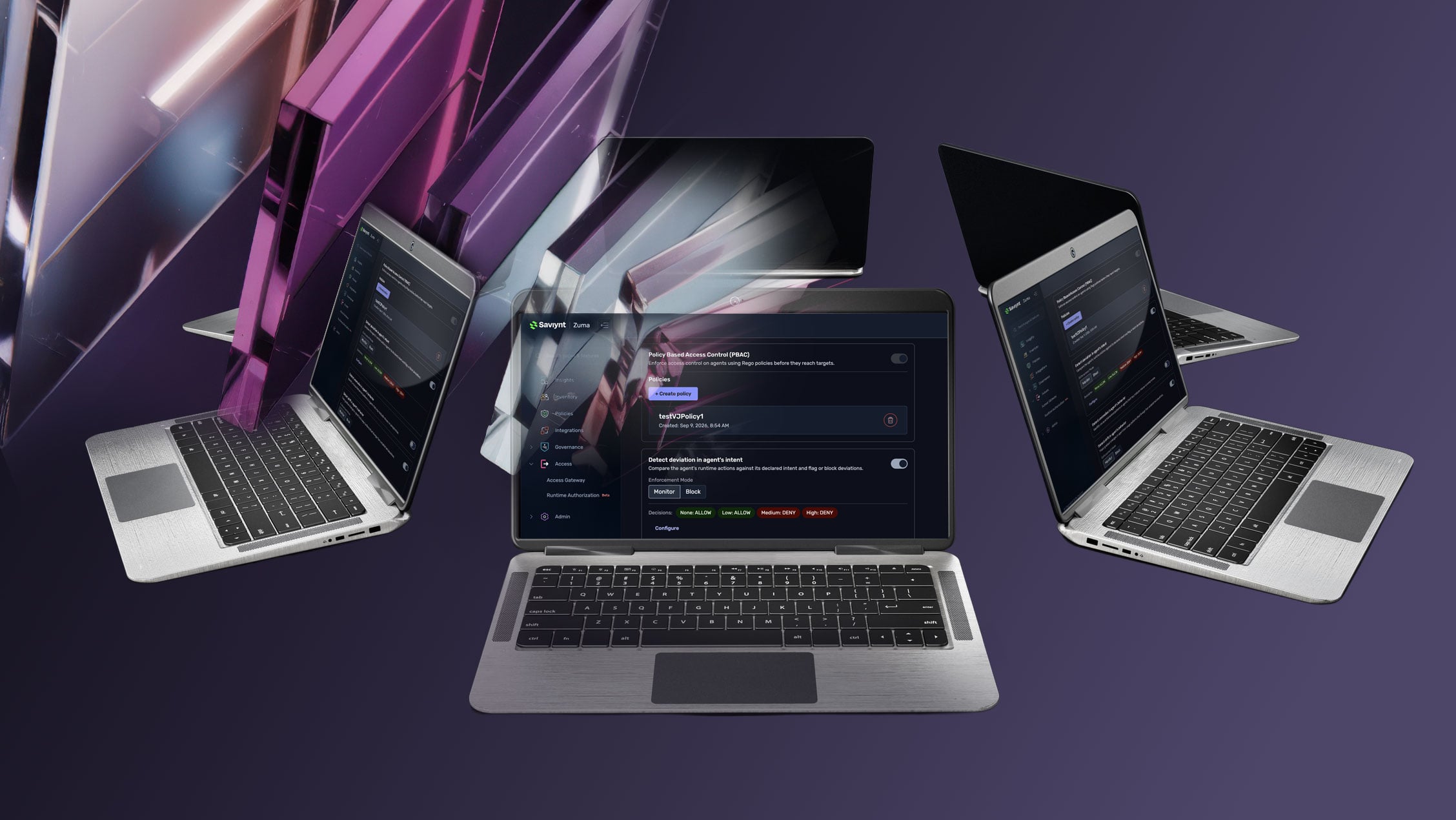
Saviynt PAM helps organizations move from stored privilege to governed, just-in-time privileged access. Instead of leaving elevated permissions active by default, teams can approve access when there is a legitimate need, scope it to the task, monitor the session, and remove access when the work is complete.
This supports attack surface reduction by removing unnecessary privilege, limiting access paths, and replacing standing access with temporary access tied to business needs.
It also strengthens identity and access controls by giving teams a consistent way to govern, approve, monitor, review, and remove privileged access. That matters because access decisions need to reflect more than assigned permissions. Teams need clearer answers about who or what has elevated access, why they have it, how that access is used, and whether it still matches the identity’s current risk profile. That risk profile should reflect where the identity sits on the privilege spectrum, from broad administrative control to narrower access that still affects sensitive data, systems, or business workflows.
Saviynt brings PAM into a unified identity security platform. That matters because privileged access now spans human users, non-human identities, cloud identities, service accounts, and AI-connected identities. Managing those access paths in isolation leaves gaps.
Modern PAM reduces risk by making privileges temporary, governed, and tied to a specific purpose. Saviynt helps organizations apply that model across the broader identity surface, so privileged access is controlled wherever it appears.
AI does not replace foundational controls. It raises the standard for them.
The Five Eyes guidance warns about AI, but it also points to a practical security reality: foundational controls need to hold up when threat timelines compress.
Privileged access is one such control. Organizations that rely on standing privilege, static access models, and periodic reviews carry unnecessary risk. Access that remains active by default gives attackers more paths to find, more permissions to abuse, and more room to move once they get inside.
Modernizing Privileged Access Management helps reduce that risk. By removing standing privileges and continuously governing access across human, non-human, cloud, and AI-connected identities, organizations can reduce the attack surface, strengthen identity controls, and improve resilience.
AI raises the bar for PAM. Organizations that remove unnecessary access, make privilege temporary, and tie privileged activity to clear business need will be better prepared for compressed threat timelines.
Explore Saviynt Privileged Access Management.
FAQs
The guidance reinforces that AI is accelerating cyber risk, which increases the need for strong Privileged Access Management. PAM helps organizations reduce unnecessary access, limit privileged activity, and strengthen identity controls before attackers can exploit weak privilege models.
AI can help attackers move faster by identifying access paths, analyzing weaknesses, and refining exploitation attempts with less manual effort. When privileged access is persistent or poorly governed, attackers have more opportunities to use it once they gain a foothold.
Standing privilege is elevated access that remains active even when not in use. This can include admin rights, service account permissions, cloud roles, or other powerful access that stays available by default.
Zero Standing Privilege removes permanent privileged access by default. Access is granted only when needed, scoped to a specific task or system, and removed when the work is complete, reducing the number of paths attackers can use.
Privileged access is no longer limited to human administrators. Service accounts, workloads, cloud identities, automation, and AI-connected workflows can all access sensitive systems or trigger important actions, so they need the same level of governance and control.