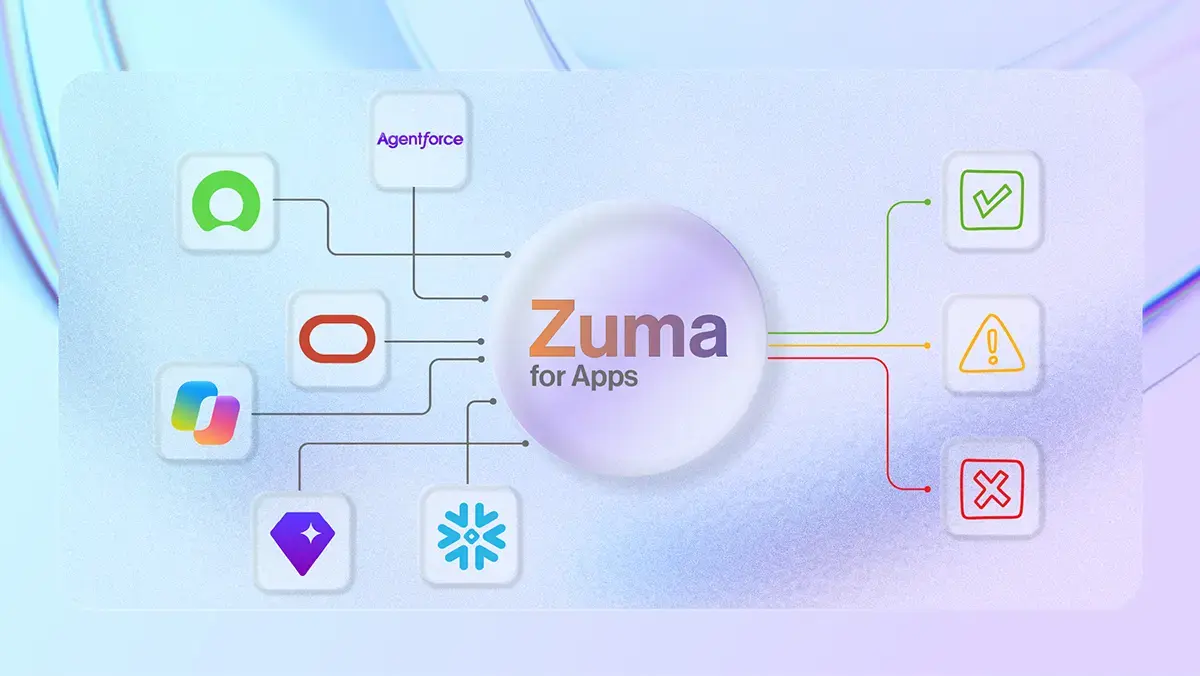

Often, corporate identity governance and administration (IGA) and access governance programs focus on individual business applications, like Oracle, SAP, or Salesforce. Organizations build robust controls to ensure separation of duties (SoD) within these applications.
However, this approach overlooks the potential for cross-application risk. When processes span multiple, interconnected apps — and AI agents are granted access to all of them — identity becomes the connective tissue between them. As a result, effective risk management requires unified visibility and cross-app risk management.
We still think about access risk one application at a time
Most access risk management programs manage SoD on a per-app basis. This approach is reinforced by the fact that compliance frameworks often scope controls to specific systems, and key risk management processes such as access reviews, role definitions, and risk scoring are applied within the context of a specific app.
Per-application governance made sense when business processes were largely contained within a single application, but this is no longer the case. These processes have fragmented across multiple business applications, such as Salesforce, SAP, and Workday, and expanded to include cloud infrastructure, privileged systems, Software as a Service (SaaS) platforms, and AI agents.
In the modern enterprise, workflows, identities, and risk are distributed across multiple interconnected applications. Application owners often have visibility into their own systems but lack insight into the wider business processes. With application-centric governance, this visibility gap makes it difficult to address threats that span multiple applications within the broader enterprise.
Modern risk follows identities, not applications
Identities have become the control plane that links enterprise apps, cloud infrastructure, privileged systems, and SaaS platforms. Human users and non-human identities (NHIs) alike often have access to multiple applications, and this access accumulates over time if it isn’t revoked after projects are completed.
Accumulated access becomes accumulated risk, as each new application or resource increases the risk of SoD conflicts, excessive privileges, standing access, and other identity risks. This challenge has accelerated with the growth of NHIs and AI agents, who often receive access without formal provisioning or approval processes.
Often, organizations have a good understanding of access within individual systems but lack the visibility and context required to answer what an identity can do across the enterprise. By governing within the scope of individual apps, companies miss the bigger picture.
Cross-application risk emerges from relationships
Traditional IGA can’t effectively address access risks in modern environments. The reason is that the most significant risks arise from combinations of permissions, systems, and identities across multiple applications, rather than from any individual entitlement.
For example, sensitive data sourced from one system can be exfiltrated via another, unrelated system (like a personal cloud storage account). SoD rules imposed within a single application miss the fact that the various elements of business processes (and the associated risks) are now commonly distributed across multiple applications.
The top access risks to the business are emergent in nature, arising from unintentional combinations of otherwise acceptable and benign privileges. The expansion of AI agents and NHIs exacerbates this issue, since tools may be assigned privileges without proper review and not have them revoked once the required task is complete. These tools can run 24/7 at massive scale, creating a rapidly shifting identity landscape. Ever-expanding entitlements and integrations across automated workflows and AI agents result in an exponential growth of an identity’s effective permissions over time.
The most significant access risks don't usually exist within a single application. They emerge from the relationships between identities, permissions, applications, infrastructure, and AI-driven processes across the enterprise.
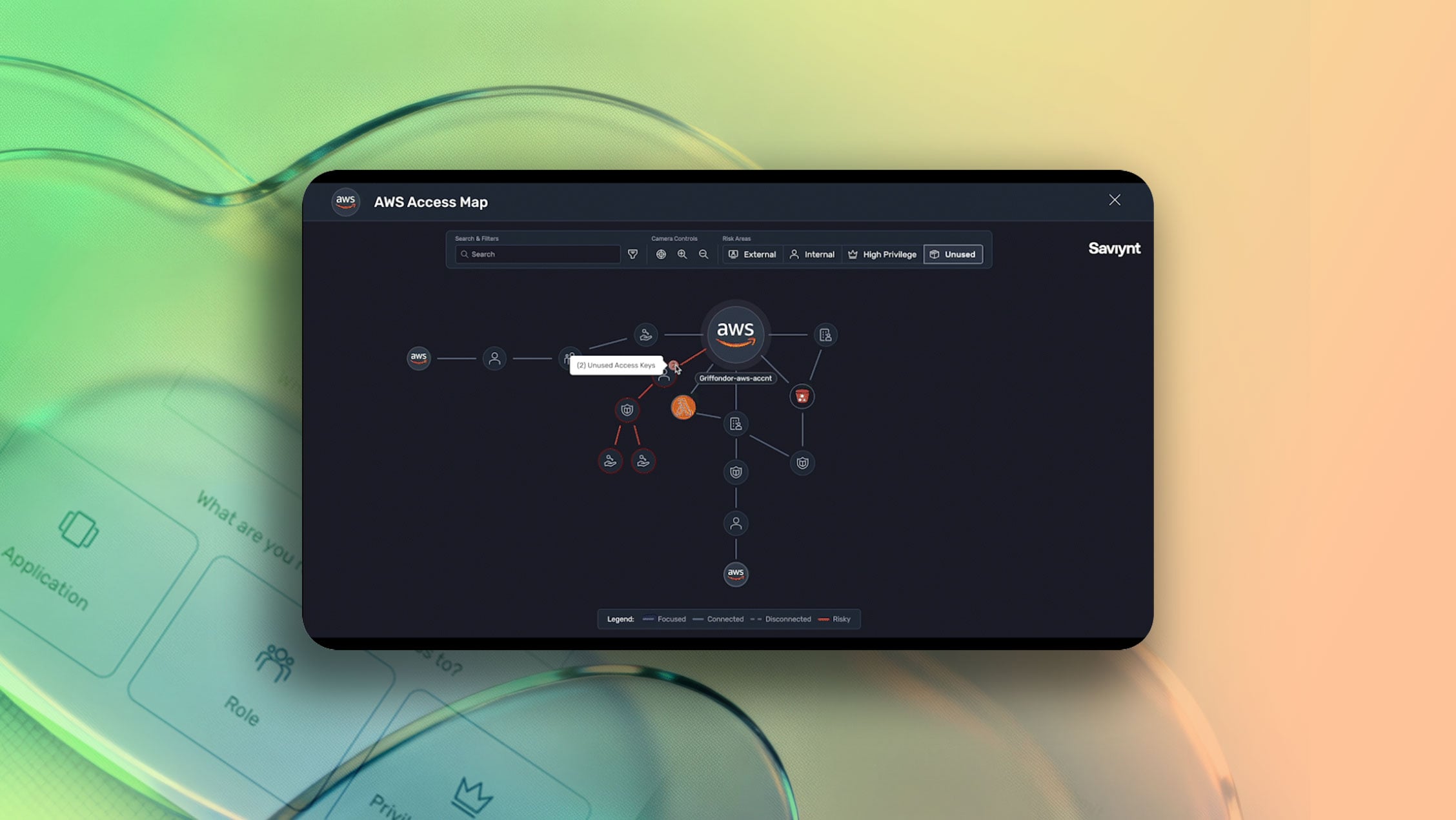
These relationships define an identity’s effective access, as combinations of permissions that seem appropriate in isolation can have unintended effects. Effective risk management requires insight into these relationships and the associated risks across the enterprise network.
What cross-application risk actually looks like
Cross-application risks arise from combinations of privileges across applications. While benign in isolation, they’re toxic when combined together. These risks appear in many forms across the enterprise.
For example, an organization’s vendor management processes could be fragmented across multiple applications. The enterprise resource planning (ERP) system manages vendor management and approval, while payment approval processes live in another system. Without visibility into both systems, a governance program might miss that the same identity owns both and can fraudulently create, approve, and pay fake vendors.
Consider another example. An HR administrator has permission to create employee records in Workday. Separately, the same identity can create and modify privileged Active Directory accounts. Viewed independently, neither permission appears unusual. An HR administrator creating employee records is expected, and creating Active Directory accounts may seem like a routine IT function.
However, when combined, the identity's effective access tells a very different story. That individual could create a fictitious employee, provision a privileged account for that identity, and establish unauthorized access to enterprise systems. Neither the HR team nor the Active Directory administrators would likely identify this risk because each only sees the permissions within their own domain. The risk doesn't exist within either application. It emerges only when those permissions are viewed together in the context of what the identity is actually capable of doing.
Alternatively, consider an AI agent deployed to accelerate security operations. It's granted read access to the SIEM to triage alerts, write access to the ticketing system to create incidents, and administrative access to endpoint management tools to isolate affected machines. Each permission is defensible in isolation. But together, they give the agent the ability to observe threats, suppress alerts, and remove devices from the network.
Traditional governance was never designed to see these risks
Traditional IGA was built to answer “who has access to this application?” At the time, business processes were contained within individual applications, and privileges changed slowly under the “joiner, mover, leaver” model. With this scope and pace of change, point-in-time reviews and application-centric controls could be effective.
Application access governance (AAG) expanded on IGA to answer exactly what access and entitlements an identity has. This enables the organization to address deeper governance, compliance, and SoD challenges.
In the modern enterprise, processes are fragmented across multiple interconnected systems, and application owners often have deep visibility into their systems but little insight into how an identity is used elsewhere in the business. Additionally, the pace of change has accelerated dramatically with NHIs and AI agents as access evolves continuously as users change roles, new applications are connected, cloud environments evolve, and AI agents and non-human identities begin performing new tasks. Today, AI agents and automated workflows can be provisioned and deprovisioned within minutes or hours, rather than quarters. When identities change at machine speed, governance must operate at the same level.
Traditional governance wasn't built to understand how identities, permissions, and systems interact across the enterprise. That's why organizations need a more continuous, identity-centric approach to managing modern access risk.
Modern application access governance must be cross-application and continuous
The access risks that matter most increasingly exist between applications, identities, and systems, requiring a fundamentally new approach to governance. Application access governance (AAG) complements traditional IGA, providing deeper governance over what access and entitlements an identity has within business applications. While IGA answers "who should have access," AAG answers "exactly what access does an identity have, what can they do with it, and does it create risk?"
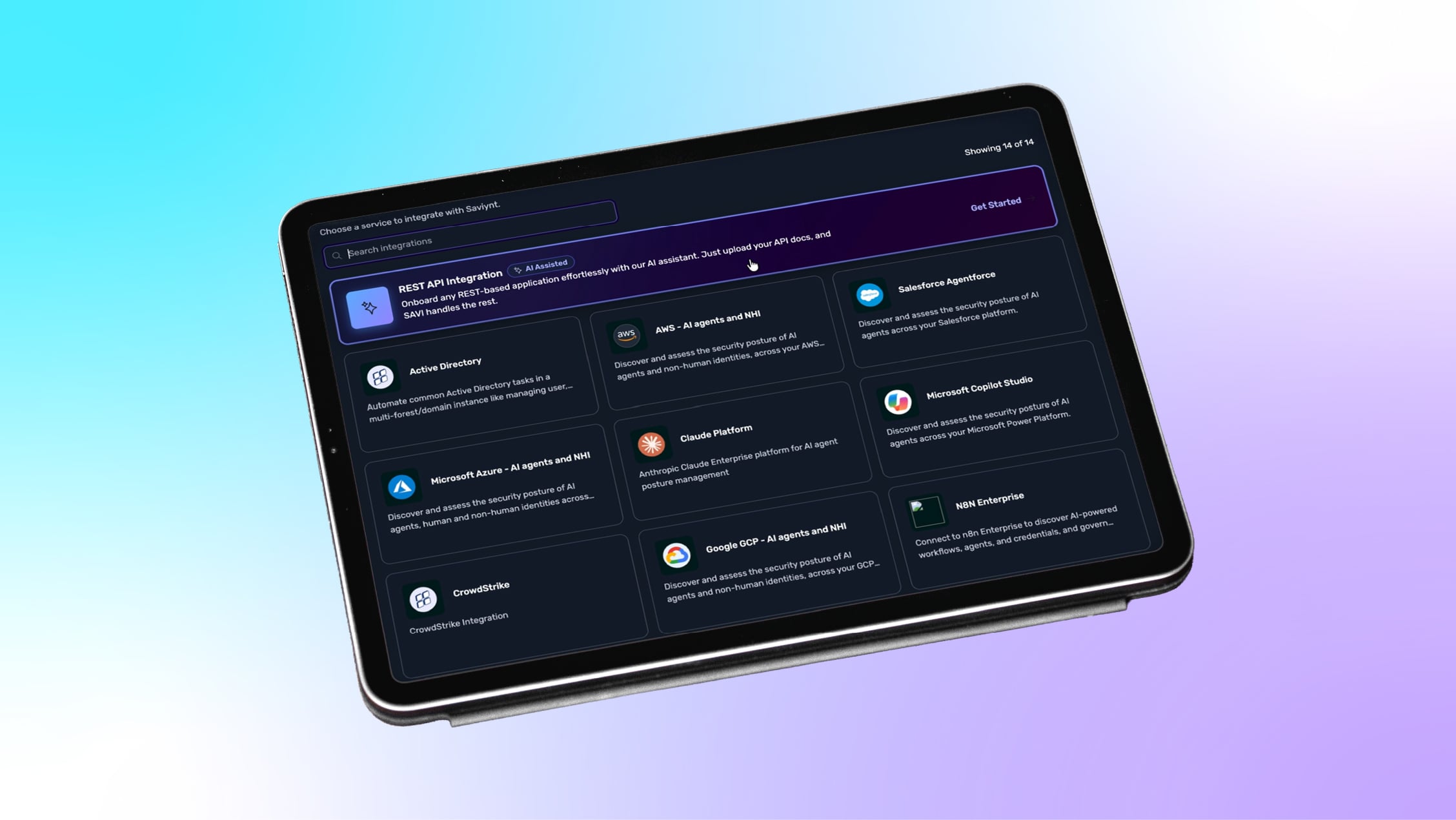
Modern AAG adapts to the modern enterprise environment, with its complex mix of applications and growing number of NHIs and AI agents. It extends the foundation provided by traditional IGA and AAG by continuously understanding effective access across applications, infrastructure, and AI-driven environments.
To manage cross-application risks, enterprises need:
- Cross-app identity correlation to understand the full scope of provisioned access.
- Business context to promote an understanding of what access actually enables and what combinations introduce risk.
- Continuous monitoring to catch evolving threats.
- Enterprise-wide SoD analysis and risk management.
- Risk scoring based on the aggregate risk created by an identity’s effective access across the enterprise, rather than risks within individual applications.
- Consistent identity-agnostic coverage and enforcement for human users, NHIs, and AI agents alike.
Modern Application Access Governance stretches beyond increasing access. Continuous understanding of an identity's effective access and the aggregate risk it poses across the enterprise must also be included. As identities, applications, infrastructure, and AI become increasingly interconnected, governance must evolve from understanding access within individual systems to understanding what identities can truly do across the enterprise.
Learn more about how to move from fragmented access governance to a continuous model with our eBook, Why Application Access Governance Is at an Inflection Point.
Ready to see how Saviynt maps and governs access risk across your entire application footprint? Request a demo today.