
OpenAI and more than 100 organizations recently called for an urgent global effort to strengthen cyber defenses before AI-enabled attacks become more widespread and sophisticated. Their collective cyber defense letter identifies excessive permissions as a systemic weakness and recommends least privilege and stronger access controls as part of the response.
AI is making attackers more efficient while increasing the number and capabilities of identities working inside enterprise environments. Alongside employees, contractors, service accounts, and workloads, organizations must now govern AI agents that can access data, invoke tools, interact with applications, and take actions with varying degrees of autonomy.
This expansion changes how quickly access can become exposure. An attacker equipped with AI can identify and exploit excessive permissions faster than a human working alone. An autonomous agent can exercise its authority at machine speed, moving from one action to the next before a person has time to recognize that its behavior has crossed an intended boundary. In either case, the interval between gaining access and causing harm continues to shrink.
Privileged access management was already essential, but AI is changing both its urgency and its scope. Organizations still need to discover privileged access, eliminate unnecessary standing permissions, and enforce least privilege consistently. However, modern PAM can no longer focus primarily on a relatively small set of administrator accounts. Privilege is now distributed across workforce users, service accounts, workloads, other non-human identities, and AI agents. AI magnifies the consequences of leaving any of those identities outside the program: powerful access remains ungoverned, standing authority persists after a task ends, and inconsistent enforcement creates openings that attackers or autonomous agents can exploit at machine speed.
Get the PAM fundamentals right
The response to AI-era privilege risk should begin with a mature privileged access management program that works across the existing environment. Controls designed specifically for AI agents may eventually become part of that program, but they cannot compensate for privileged accounts that remain undiscovered, unmanaged, or permanently elevated.
For organizations without a formal PAM program, the immediate priority is to establish visibility and control. Security teams need to identify where privileged access exists, determine who or what holds it, and understand which systems, applications, and data that authority can reach. Privileged accounts and activity must then be brought under consistent governance and enforcement, so access has a defined owner, purpose, and policy. Those policies determine how that access is granted, monitored, and removed.
Even organizations with strong traditional PAM programs may no longer have complete coverage. A program can govern administrator accounts effectively while leaving service accounts, workloads, cloud entitlements, other non-human identities, and AI agents outside the model. Getting the fundamentals right now means extending the same visibility, governance, and enforcement across the full range of identities that hold elevated authority. Otherwise, policies may be applied inconsistently across business units, environments, and identity types, allowing standing access to accumulate without a clear view of how that authority is being used.
A mature program removes unnecessary standing access, grants elevated permissions only when justified, and applies least privilege consistently. It also monitors how privileged authority is requested, approved, exercised, and removed. When behavior violates policy or risk becomes unacceptable, the organization must be able to terminate the active session. Without that visibility, organizations may know that a privileged account exists yet remain unaware of the actions performed through it or the risks those actions pose.
AI raises the urgency of completing this work because it amplifies gaps in visibility, standing access, and enforcement. With the fundamentals in place, organizations can extend privileged-access controls across the growing range of human, non-human, and AI identities operating throughout the enterprise.
Treat privilege as a spectrum
Getting the PAM fundamentals right also requires organizations to reconsider what qualifies as privileged access. The traditional model placed a small group of administrators and highly elevated accounts on one side of the line, with everyone else on the other. That distinction no longer reflects how authority is distributed across modern enterprise environments.
A workforce user may be privileged because they can export sensitive customer data, approve financial transactions, or change application configurations. A service account may have broad access to databases or infrastructure. A workload may modify production resources, while an AI agent may invoke tools, access multiple systems, and take actions on behalf of a person. These identities can create significant exposure through the access they already hold.
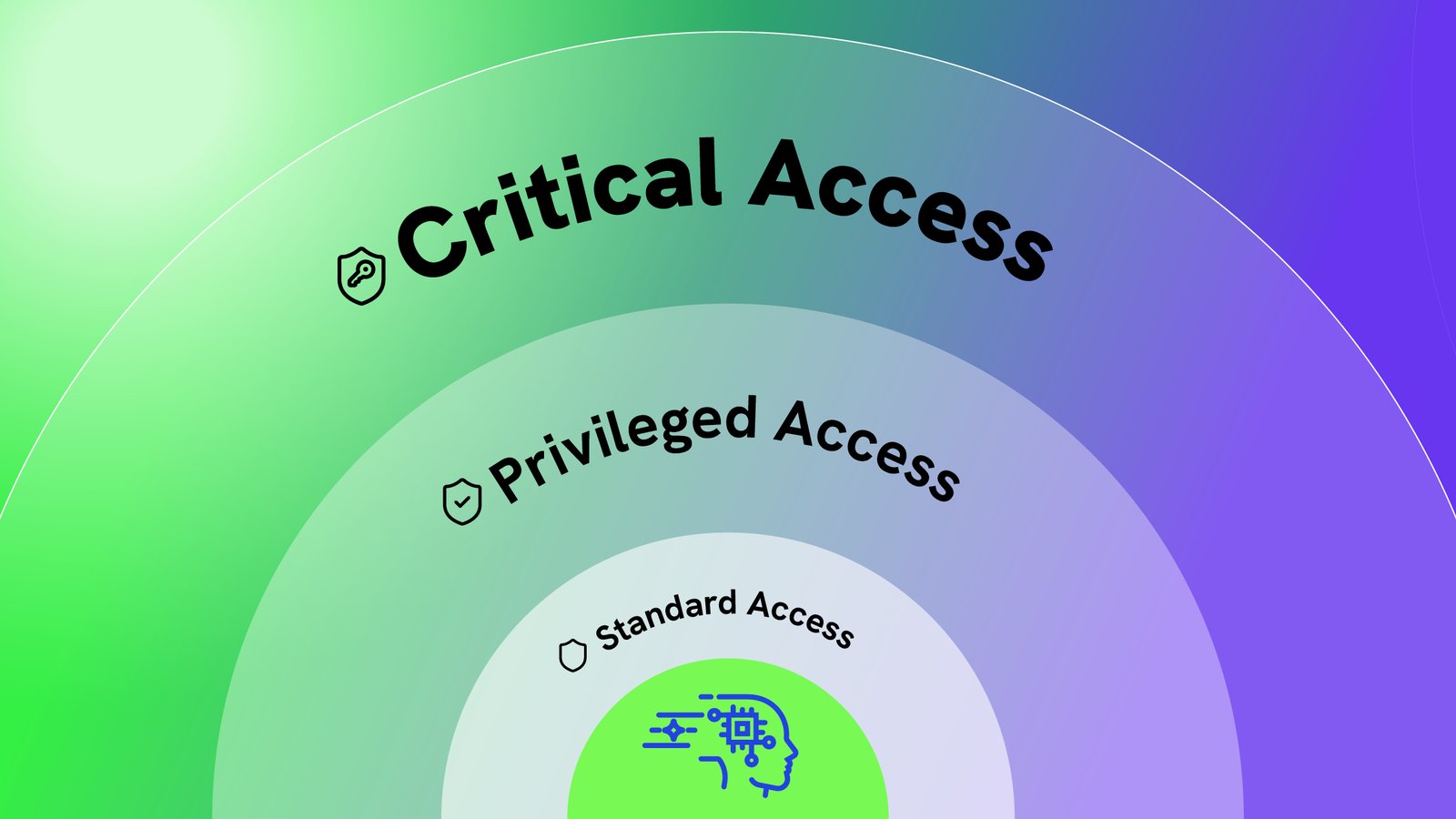
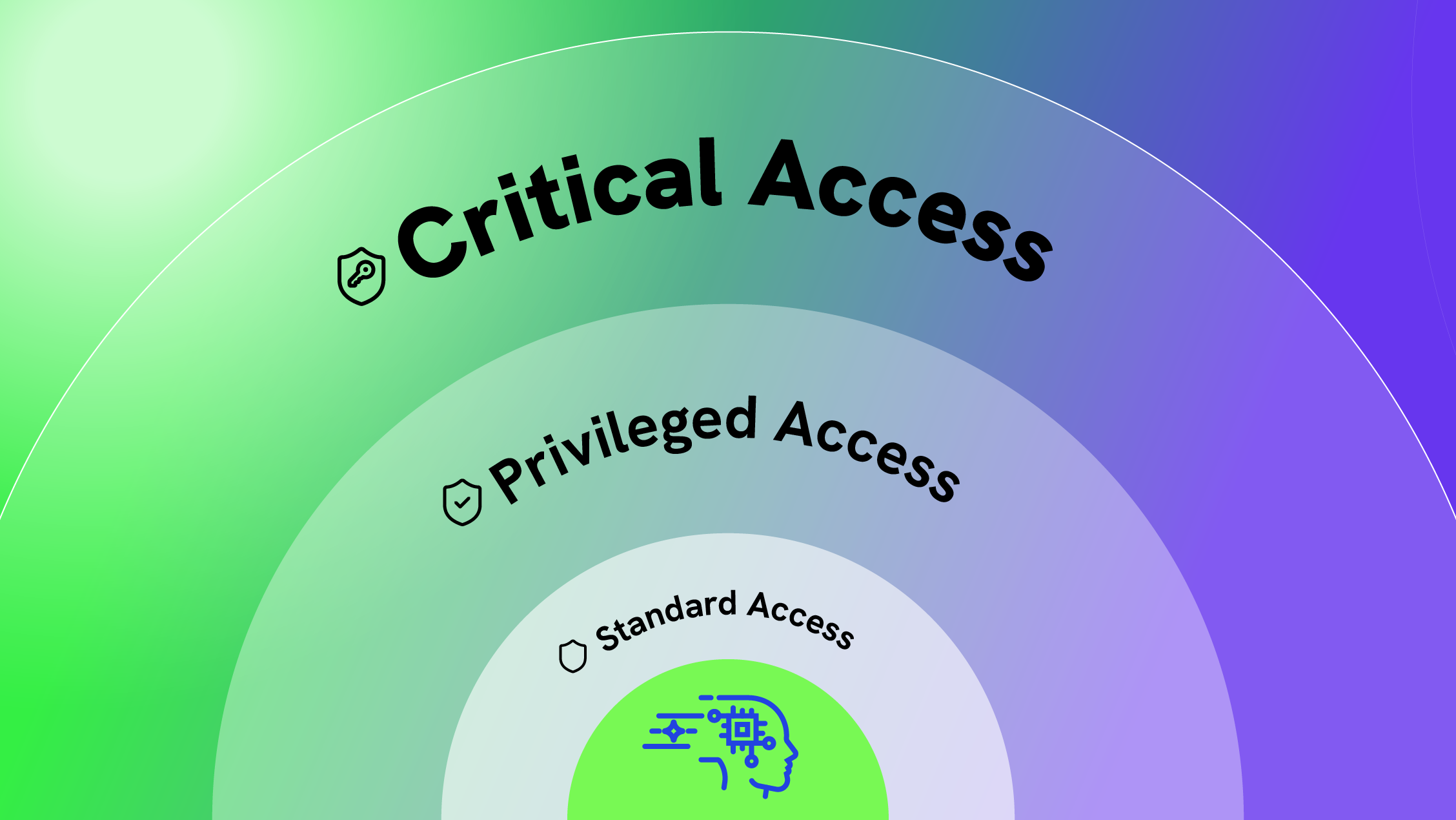
Privilege, therefore, exists along a spectrum. An identity’s position on that spectrum depends on the resources it can reach, the actions it can perform, and the conditions under which that authority is available. Access that appears routine in one context may become highly privileged when it involves sensitive data, a production environment, an elevated operation, or an identity capable of acting autonomously.
Every identity can be privileged. The practical questions are how privileged it is, under what conditions, and for how long. Answering them allows organizations to apply controls based on the authority and risk involved.
Placing each identity on the Privilege Spectrum gives security teams the context to apply PAM controls in proportion to its authority and risk.
Extend modern PAM across every identity
Modern privileged access management begins by discovering authority wherever it exists across workforce users, service accounts, workloads, other non-human identities, and AI agents. The resources each identity can reach and the actions it can perform determine the controls it requires.
Standing privilege is authority waiting to be used. AI raises the stakes because an attacker or autonomous agent can exercise that authority at machine speed, reducing the time security teams have to identify and contain harmful activity. Organizations must therefore minimize standing privilege and make elevated access available only for the specific task that requires it. Just-in-time access grants the required permissions for a defined purpose and period. Zero Standing Privilege removes persistent elevation between tasks and automatically expires the grant when the work is complete.
The strength of the control should reflect the privilege and risk involved. A low-risk request that matches an identity’s approved purpose may proceed automatically under policy. Access to sensitive data, production systems, or high-impact actions may require stronger authentication, additional approval, closer monitoring, or more restrictive conditions. The same principle applies to every identity, but the resulting controls may differ based on what that identity can do and the context surrounding the request.
An identity’s business purpose, ownership, behavior, environment, and access requirements can change over time. New integrations may expand its reach, while unusual activity or a shift in risk may make previously acceptable access inappropriate. Continuous monitoring and governance allow organizations to reassess authority as those conditions change, revoke access when necessary, and prevent temporary privilege from persisting beyond its approved purpose.
Connect PAM to the broader identity-security program
Modern PAM should not operate as an isolated control. Proportional access decisions depend on knowing who or what an identity is, why it needs elevated authority, what that access enables, and who is accountable for its use. Saviynt connects privileged access controls with identity governance and application context, bringing that information together when access is evaluated. This converged approach allows organizations to make decisions based on the identity, its business purpose, and the actual risk of the access rather than evaluating each request in isolation.
Identity governance establishes the foundation for the decision. It associates an identity with an owner, a business purpose, a lifecycle state, and an access policy. For an employee, that context may include a role, department, and current responsibilities. For a service account, workload, or AI agent, it should identify the application or process the identity supports, as well as the person accountable for its activity.
Application and entitlement context then shows what the access actually allows the identity to do. Two permissions with similar names may carry very different levels of risk: one may provide read-only access to routine information, while the other may allow an identity to export sensitive records, change production configurations, or approve transactions. Understanding those capabilities is essential to determining where an identity falls on the Privilege Spectrum.
Privileged-access controls use that combined context to determine when and how elevated authority can be granted. Policy can evaluate the identity, stated purpose, requested action, target resource, operating conditions, and current risk before issuing access. The same model can govern workforce identities, service accounts, workloads, other non-human identities, and AI agents while adapting the resulting controls to each request.
Changes in ownership, business purpose, entitlements, behavior, or risk may alter how privileged an identity has become. Connecting PAM with identity governance and application context allows organizations to reevaluate access continuously and keep elevated authority aligned with current needs.
Finish the fundamentals, then extend them for the AI era
OpenAI’s collective cyber defense letter makes the immediate priority clear: reduce excessive permissions, enforce least privilege, and strengthen access controls before AI-enabled threats become more capable. That work requires a mature PAM program that provides visibility, removes unnecessary standing authority, and governs how elevated access is granted and used.
Those fundamentals must now extend across the Privilege Spectrum, including workforce users, service accounts, workloads, other non-human identities, and AI agents. Saviynt connects the governance, application context, and privileged-access controls required to keep authority aligned with business need as identities, behavior, and risk change.
How mature is your PAM program today? Take the PAM Maturity Assessment to evaluate your current capabilities, uncover gaps, and identify where to focus next.

-1.png)