- Shadow AI agents are creating a major identity security blind spot by operating outside of IT visibility with valid credentials.
In 2023, Samsung engineers unintentionally exposed sensitive information and internal data by using ChatGPT to speed up their work. The tool wasn't part of an approved workflow, and it wasn't monitored by IT. What made the Samsung incident concerning was that it wasn't a breach in the traditional sense; the engineers were authenticated, and the access was legitimate. There was no exploit, malware, or stolen credentials. And yet, trade secrets were leaked.
Security teams have spent years building accurate pictures of who has access to what, but traditional Identity Governance and Administration (IGA) programs, access reviews, and provisioning workflows were designed to govern people, not agents.
Shadow AI, unsanctioned agents operating outside IT visibility, is creating an identity blind spot most enterprises haven’t even begun to understand. It’s easy to think that identity risk starts when access is requested, but shadow AI makes that assumption moot. According to Saviynt's CISO AI Risk Report 2026, 75% of CISOs have already discovered unsanctioned AI tools running in their production environments. The other 25% probably just haven’t looked.
Key Concepts
- Traditional identity and access management tools can’t detect shadow AI because they only monitor provisioned identities
- Securing shadow AI requires platform-level discovery, continuous visibility, and real-time identity governance controls
How shadow AI enters the enterprise undetected
Shadow AI enters your environment when employees want to be innovative, but are too busy (or too impatient) to wait for IT.
Your analyst needs to automate a customer data workflow, so she spins up a LangChain instance on her laptop. Your engineer wants to speed up procurement queries, so he spends his weekend building something in an unsanctioned Copilot Studio workspace that IT hasn't integrated. Your implementation partner configures a rogue CrewAI agent on an unmanaged endpoint with access to core systems in order to speed up a project. None of these people is trying to create a security risk. They just want to streamline their work.
An agent built on a platform your organization manages may still create risk if the builder didn’t follow a formal request process. Shadow AI also lives where governance can’t easily reach, on local machines, unmanaged endpoints, and rogue platform instances that are harder to detect and govern.
Why is shadow AI harder to detect than shadow IT?
Shadow IT is a real risk, but it leaves a trail. Someone buys a SaaS tool, expenses it, and IT eventually catches it in a spend audit or a DNS log. The tools are unauthorized, but they are still assets. They are products with vendor names, billing records, and network signatures that security teams can trace.
Shadow AI agents don't leave that kind of trail. They're created on endpoints and in unmanaged environments by users with legitimate access. From an identity perspective, an agent with valid permissions looks indistinguishable from an authorized user. It authenticates the same way, queries the same systems, and operates within the same access boundaries. There's no rogue tool to flag or unfamiliar vendor to investigate.
What’s the real risk of Shadow AI?
Shadow AI agents carry more access than most teams realize, and that access compounds over time. A developer building an agent on a low-code platform grants it broad permissions so they can move fast. There's no deployment review or handoff to ops. Six months later, the agent still has its connections and access to systems it was never meant to touch long-term.
The core problem is that shadow AI agents skip the basic steps of identity security: discovery, classification, and governance. You can't certify access for an identity you don't know exists, and you can’t assign an owner to an agent nobody registered. So shadow agents accumulate perpetual standing privileges, with no human accountable for what they do, and without certification cycles to catch them.
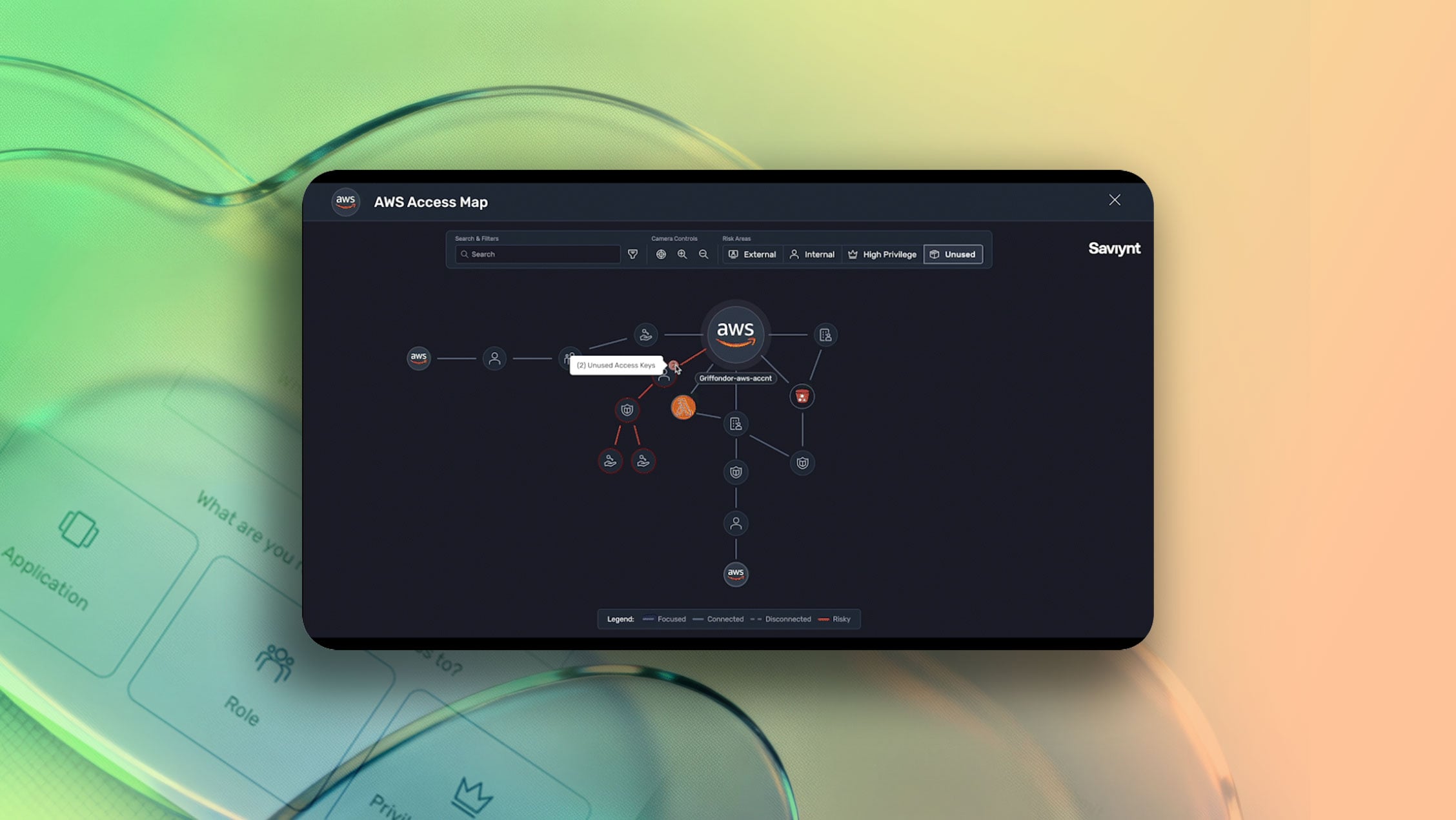
What’s more, these agents often don't operate in isolation. They frequently connect to Non-Human Identities (NHIs), like service accounts and API keys, and chain to other agents through Agent-to-Agent (A2A) protocols. A single shadow agent can sit at the center of a web of connections spanning multiple systems, and none of those connections are visible in your governance tools.
The A2A risk is more concrete than it sounds. Consider something as routine as an employee using an agent to purchase a ticket. That agent might hand off to a travel booking agent, which calls a payment agent, which queries an expense system. At every handoff, the original user's identity and access level must travel with the request, and each agent in the chain must have its own governance. Solving this requires identity chaining, where the originating user's context is preserved across every hop. It also requires runtime authorization, where each request is validated against policy at the moment of action. Without those two controls, an unregistered agent anywhere in the sequence leaves the entire chain ungoverned.
The same identity gap shows up at the application layer. If two employees prompt the same HR system and ask for salary data, they should get different answers based on their access level. But asking the model to enforce that is asking the wrong layer to do the work. LLMs are probabilistic and goal-seeking; they're built to produce the most useful response to the prompt in front of them, not to adjudicate who's allowed to see what. Access control has to live at the target application, enforced through a runtime authorization gateway that evaluates each request against the user's actual permissions before the data ever reaches the model. For shadow deployments, that gateway isn't in the path at all.
The shadow AI blind spot most enterprises are carrying
The gap between how many AI agents an organization thinks it has and how many actually exist is wide. Every agent you don't know about is access you can't assess, risk you can't scope, and an identity no one is accountable for.
This isn’t only a security problem. Anyone focused on AI adoption knows their teams are moving fast. They need to own the access governance question with the same urgency they bring to agent functionality. Access management is the foundation of productionizing AI. If it’s weak, the house won’t hold, no matter how impressive the model is.
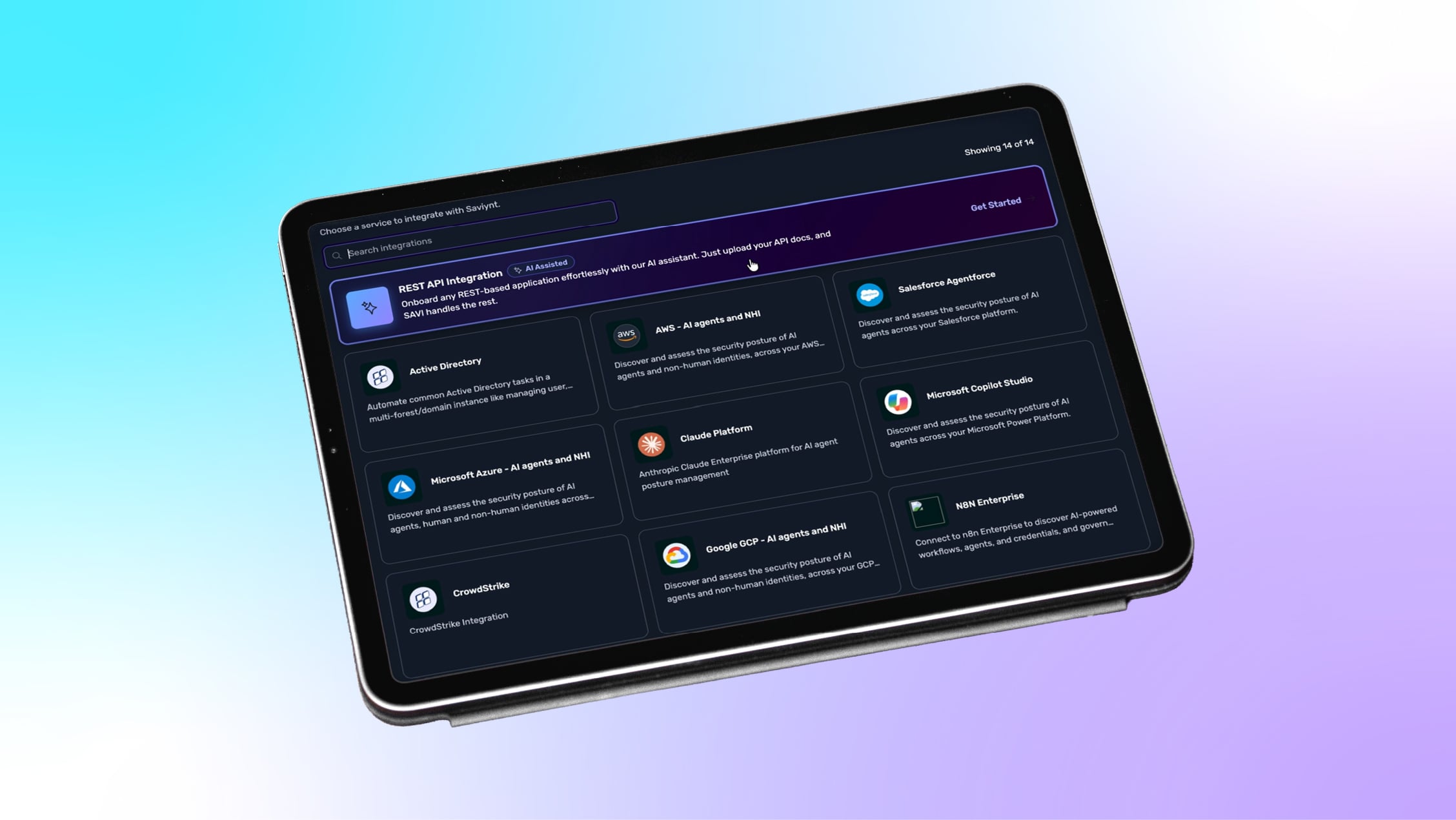
What's needed is discovery that works at the platform layer, and at the network and endpoint layer where managed platforms can't see. Something that scans the environments where agents actually live—including agent platforms, MCP servers, underlying LLMs, and the unmanaged endpoints where rogue instances get spun up—and surfaces every agent regardless of how it was created.
If you can’t name every AI agent in your environment, you don’t know who, or what, has access.
Frequently Asked Questions About Shadow AI
Shadow AI risk is typically shared across multiple teams, including security, identity, data, and engineering. Because AI agents interact across systems and environments, no single function has full visibility or control. Organizations that define clear cross-functional ownership models are better equipped to manage shadow AI at scale.
Enterprises should treat shadow AI as part of a broader identity and access strategy rather than a standalone initiative. Prioritization often starts with improving visibility into non-human identities, expanding governance controls to AI-driven activity, and aligning AI adoption with existing security frameworks.
Shadow AI is expected to be a long-term challenge. As AI capabilities become embedded into everyday tools and workflows, unsanctioned or ungoverned usage will continue to emerge. Organizations that invest in continuous discovery and governance will be better positioned to adapt.
Common signals include rapid adoption of AI tools across teams, increased use of low-code or agent-based platforms, and limited visibility into how non-human identities are accessing systems and data. Gaps between known AI initiatives and actual usage patterns can also indicate shadow AI activity.
Shadow AI can create gaps in audit trails and accountability, making it difficult to demonstrate who, or what, accessed sensitive data. Without clear visibility into AI-driven interactions, organizations may struggle to meet regulatory requirements or respond effectively to audits.
Organizations that succeed will maintain real-time visibility into identities, access relationships, and AI-driven activity across their environments. The ability to continuously discover and govern both human and non-human identities will be a key differentiator as AI adoption scales.
Your next read: You Can’t Secure What You Can’t See – Posture Management for AI Agents.
References
- 1https://mashable.com/article/samsung-chatgpt-leak-details