Daily operations increasingly include some form of artificial intelligence. AI assistants accelerate productivity. Developers build AI-powered applications. Organizations are embedding AI into customer experiences, workflows, and decision-making processes. Yet while AI adoption accelerates, identity security often lags behind.
As organizations operationalize AI at scale with Claude Enterprise, they need a way to rapidly innovate without compromising security, governance, or compliance. Security teams need to understand who has access, what permissions they hold, and whether that access remains appropriate over time.
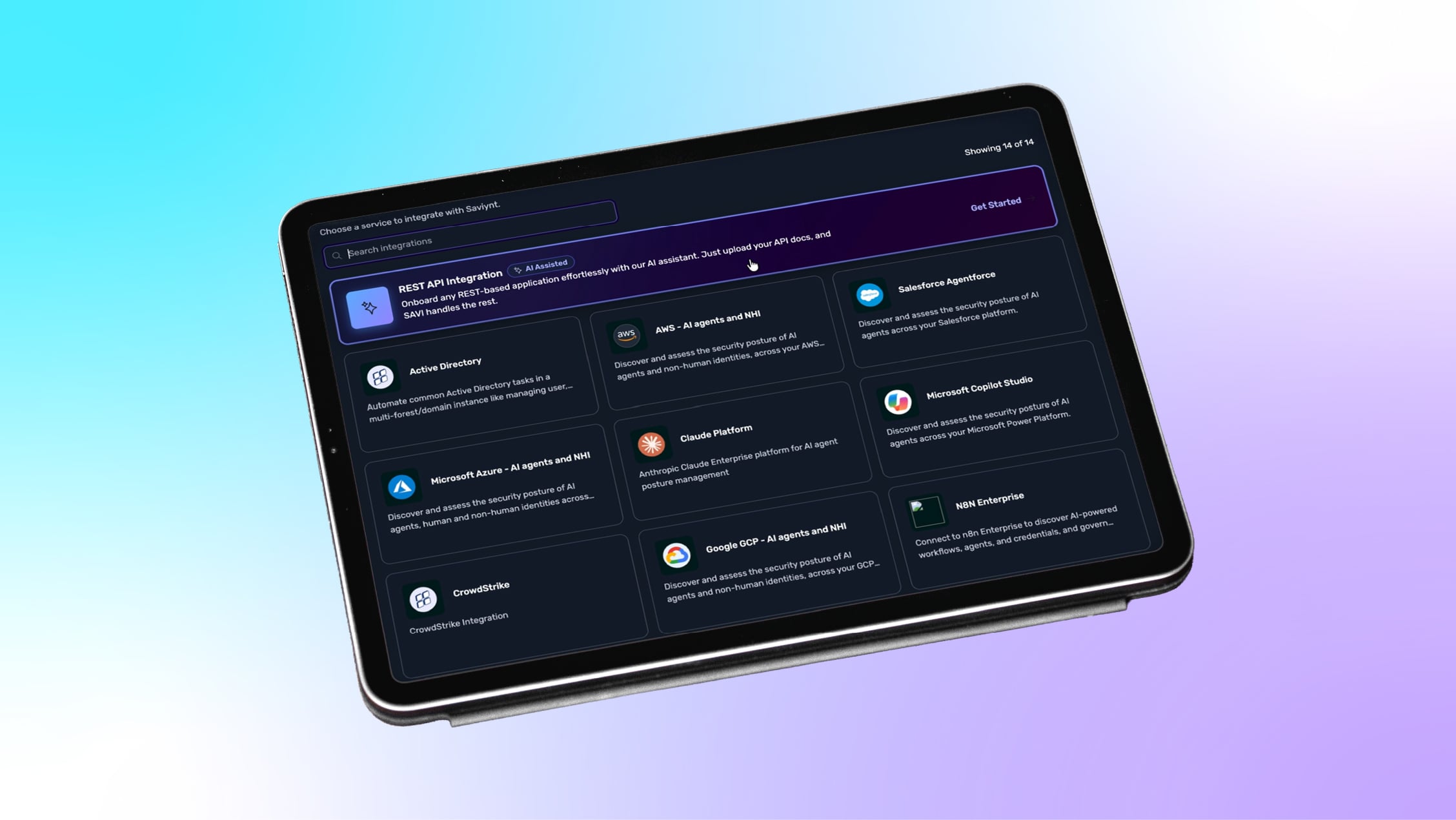
At Saviynt, we believe identity security is foundational to the safe adoption of AI. That's why we're excited to announce our new integration with the Claude Compliance API, bringing AI agents under a unified identity security framework.
Why identity security for Claude matters
AI platforms are becoming repositories of valuable business knowledge, proprietary information, and sensitive data. As adoption grows, unmanaged access creates the same challenges organizations have faced with other enterprise technologies:
- Limited visibility into who has access
- Excessive permissions that accumulate over time
- Manual compliance processes and audit preparation
Without centralized governance, AI access can quickly become disconnected from the identity security controls organizations rely on elsewhere. Bringing AI platforms under identity governance helps close that gap.
Bringing identity security to Claude Enterprise
Saviynt’s integration with the Claude Compliance API is designed to apply the same governance, lifecycle management, and compliance controls to their AI platform from the moment those AI models are introduced.
This integration helps organizations to:
- Automate onboarding and offboarding: Ensure users receive the right Claude access on day one and have access removed immediately when it is no longer needed.
- Provide birthright access for technical teams: Automatically grant developers, product managers, and AI specialists role-based access to Claude without tickets, delays, or manual intervention.
- Enable self-service access requests: Allow business users to request AI capabilities through a centralized portal with approval workflows that validate business need and budget availability.
- Enforce least privilege for users and AI agents: Continuously govern permissions and entitlements to ensure that human and non-human identities alike have only the access required to perform their tasks.
- Conduct continuous access reviews and certifications: Verify that Claude access remains appropriate over time and maintain compliance across the organization.
- Optimize AI license costs: Reclaim unused or misassigned premium AI licenses through centralized visibility, governance, and access certifications.
Enable to see associated accounts for each entitlement
The result is a more consistent and scalable approach to governing AI access across the enterprise. Without centralized governance, organizations risk unmanaged AI access, excessive permissions, limited visibility into who can access AI systems, and rising AI costs.
Identity security must extend to AI
Securing AI is not just about protecting models. It's about governing the identities that interact with them.
As AI adoption expands, organizations need a consistent approach to managing human, non-human, and AI identities within a shared governance framework. This is the foundation of Identity Security for AI.
By extending identity governance to Claude Enterprise, organizations can apply the same principles of visibility, accountability, lifecycle management, and least privilege that have long been essential to enterprise security.
The future of identity security for AI
Governing AI platforms is only one part of the challenge. Organizations must also discover shadow AI, govern AI agents throughout their lifecycle, verify identities behind AI-driven actions, and enforce runtime authorization based on intent, context, and risk.
Identity Security for AI requires visibility, governance, and control across every AI identity and every AI interaction.
To learn more about this integration, please visit our webpage or integration guide.